
Sewage Backup in Your Home: What Arizona Homeowners Should Do
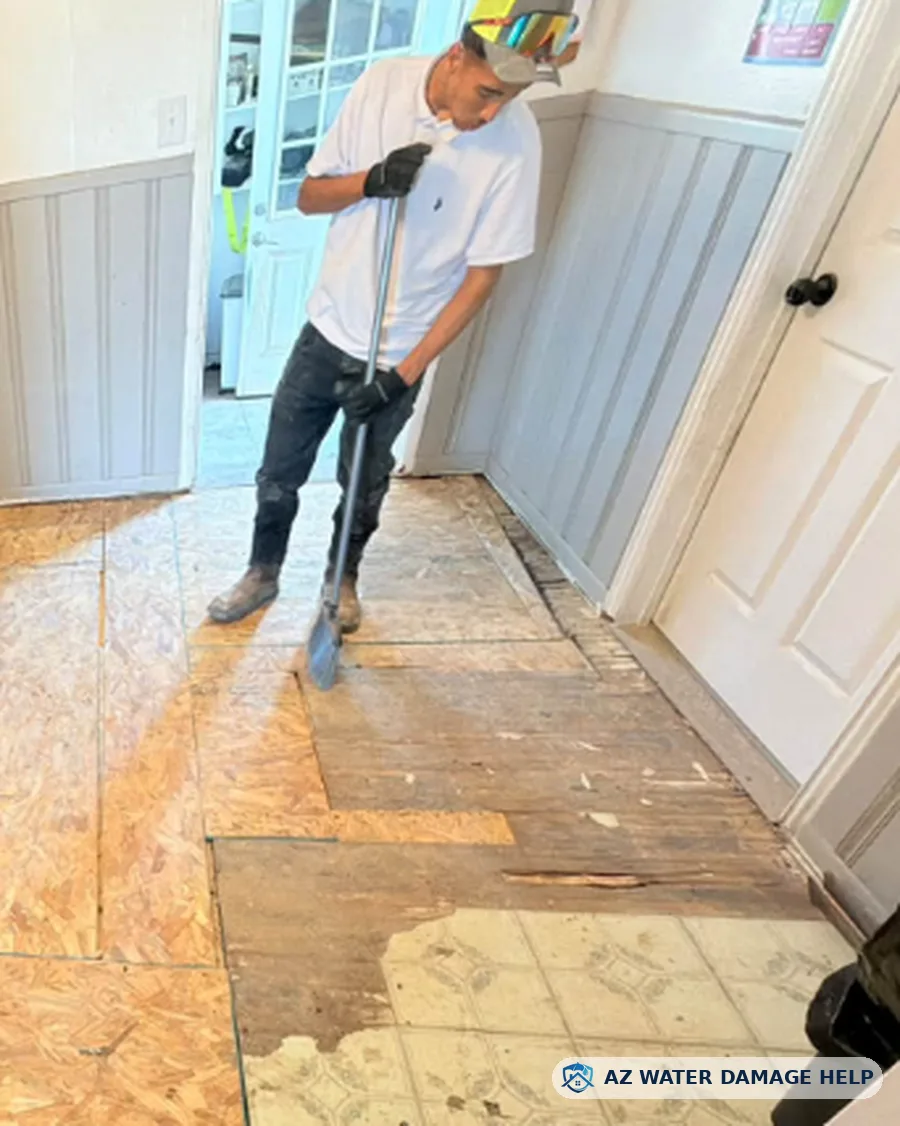
If sewage backs up into your home, stop using all water, keep children and pets away, and do not touch it without gloves and boots. Turn off power to wet areas if it is safe. Call a plumber to clear the blockage and a cleanup crew for the damage. Sewage is Category 3 water and needs professional cleanup.
Few things are worse than dirty water coming up through a tub or floor drain. A sewage backup is not just a mess. It is a health hazard that can spread bacteria through your home. This guide covers the warning signs, the first steps to take and what proper cleanup looks like in Arizona.
Reading this with water on the floor? Get help first.
Need Help Now? Tap Here(833) 937-0179What are the warning signs of a sewer backup?
A main sewer line usually gives warnings before it backs up. The key sign is several drains acting up at once, especially the lowest drains in the house. One slow sink is often a local clog. Many slow drains point to the main line.
- Dirty water rising from a floor drain, tub or shower
- Gurgling toilets or drains
- Sewer smell inside the home
- Several drains clogging at once
- Water coming up when you run the washer or dishwasher
- Water or wet soil around the sewer cleanout in the yard
What should you do first when sewage backs up?
Stop adding water to the system, protect people and pets, and get help. Every flush, shower or load of laundry pushes more sewage into your home until the blockage is cleared.
- Stop using water. Do not use sinks, toilets, the washer or the dishwasher.
- Keep people out. Keep children, pets and anyone with a weak immune system away from the area.
- Protect yourself. Do not touch sewage without gloves and boots. Wash your hands well after any contact.
- Cut power if safe. Turn off power to wet areas at the breaker only if you can reach it without stepping in water.
- Air it out. Open windows if the weather allows, and close doors to the rest of the house.
- Take photos. Document the water, the drains it came from and damaged items for your insurer.
- Make two calls. Call a plumber for the blockage and a cleanup crew for the damage.
What should you NOT do after a sewage backup?
Some common reactions make a sewage backup worse or less safe. Avoid these until a professional has looked at the damage.
- Do not pour chemical drain cleaner into a backed-up line.
- Do not mix bleach with other cleaners. Some mixes create toxic fumes.
- Do not use a household vacuum or shop vac on sewage. It can spread germs into the air.
- Do not run the HVAC fan if the air handler is near the affected area.
- Do not try to dry soaked carpet or drywall and keep it. These items usually must be removed.
- Do not throw out damaged items before your adjuster sees them or you have photos.
Why does sewage need professional cleanup?
Under the IICRC S500 standard, sewage is Category 3 (black) water. It contains bacteria and viruses. Carpet, pad and drywall it soaks usually must be removed. Hard floors and framing are cleaned with disinfectants, dried and checked. Proper cleanup protects your family and supports your insurance claim.
Here is what a professional sewage backup cleanup usually includes:
| Step | What happens |
|---|---|
| Protect and contain | Crew wears protective gear and closes off the area |
| Extract | Sewage water is pumped and extracted |
| Remove | Porous materials it touched, like carpet, pad and lower drywall, are removed and disposed of safely |
| Clean and disinfect | Hard floors, framing and surfaces are cleaned and disinfected |
| Dry | Air movers and dehumidifiers dry the structure, with moisture readings |
| Odor control | Remaining odor is treated before rebuilding |
Can you clean up a small sewage spill yourself?
A very small toilet overflow on tile can be cleaned with gloves and disinfectant. Anything that soaks carpet, drywall or spreads across rooms should be handled by professionals. If you are unsure, it is safer to have it checked than to leave contamination behind walls or under flooring.
What causes sewer backups in Arizona homes?
Most backups come from a blockage in the main line. Grease poured down the kitchen drain hardens in the pipe. So-called flushable wipes, paper towels and feminine products do not break down. Tree and shrub roots can push into older sewer lines looking for water, which is common in a dry climate.
Heavy monsoon storms can also overload drains and sewer systems for a short time. Our monsoon water damage checklist covers how to prepare. Some homes in rural parts of Pinal and Pima County use septic systems, which can back up when the tank is full or the drain field fails.
How to lower your risk
- Keep grease, wipes and paper towels out of drains and toilets.
- Know where your outdoor sewer cleanout is.
- Have a plumber camera-inspect an older sewer line, especially with large trees nearby.
- Pump a septic tank on the schedule your septic pro recommends.
- Ask your plumber whether a backwater valve makes sense for your home.
Does insurance cover sewage backup in Arizona?
Many Arizona homeowners policies exclude sewer backup unless you added a sewer or water backup endorsement. Check your policy for that rider now, before you need it. If you have it, document the damage, call your insurer quickly and keep every receipt. Read does Arizona homeowners insurance cover water damage for more.
Sewage cleanup usually costs about $3,000 to $10,000 or more because of the extra safety work. See our water damage restoration cost guide for all the ranges.
We handle sewage cleanup in Coolidge, Eloy, Arizona City, Casa Grande and across our Arizona service areas.
Dealing with water damage now? Talk to a live person 24/7.
Get Expert Help 24/7(833) 937-0179Frequently asked questions
Is sewage backup dangerous?
Yes. Sewage is Category 3 (black) water that contains bacteria and viruses. Keep children and pets away, do not touch it without gloves and boots, and leave cleanup of anything beyond a tiny tile spill to professionals.
Does insurance cover sewage backup?
Many Arizona homeowners policies exclude sewer backup unless you added a sewer or water backup endorsement. Check your policy for that rider.
How long does sewage cleanup take?
Extraction and removal usually take a day. Drying and sanitizing take a few more days, then rebuilding depends on what was removed.
Can carpet be saved after a sewage backup?
Usually not. Carpet and pad soaked by sewage are porous and hold contamination, so the IICRC S500 standard calls for removing them. Hard floors and framing can usually be cleaned, disinfected and dried.
Who do I call first, a plumber or a cleanup company?
Call both. A plumber clears the blockage so sewage stops coming in. A cleanup crew extracts the water, removes contaminated materials, disinfects and dries the area. Our 24/7 line can help you get the cleanup side moving.

About the author
Noah Miller founded AZ Water Damage Help in Queen Creek to give Arizona homeowners fast, honest water damage help. He writes and updates these guides using public guidance from the EPA, the IICRC, the National Weather Service and Arizona state agencies. More about Noah.
Sources
- IICRC (Institute of Inspection, Cleaning and Restoration Certification)
- EPA: Mold
- Arizona Department of Insurance and Financial Institutions