
How to Choose a Water Damage Restoration Company in Arizona
Choose a water damage restoration company that answers 24/7, explains the scope and price in writing before work starts, measures moisture and keeps daily drying logs, follows IICRC drying standards, and works with your insurer without pressuring you to sign over control of your claim. Ask questions on the first call.
When water is on the floor, it is tempting to hire the first company that answers. A few quick questions on that first call can save you money and stress. This guide gives you eight questions to ask, what good answers sound like, and the red flags to avoid.
Reading this with water on the floor? Get help first.
Need Help Now? Tap Here(833) 937-0179What should I ask a water damage company?
- Do you answer 24/7, and when can a crew arrive? Ask for an honest window, not a promise.
- Will I get a written scope and price before work starts? You should.
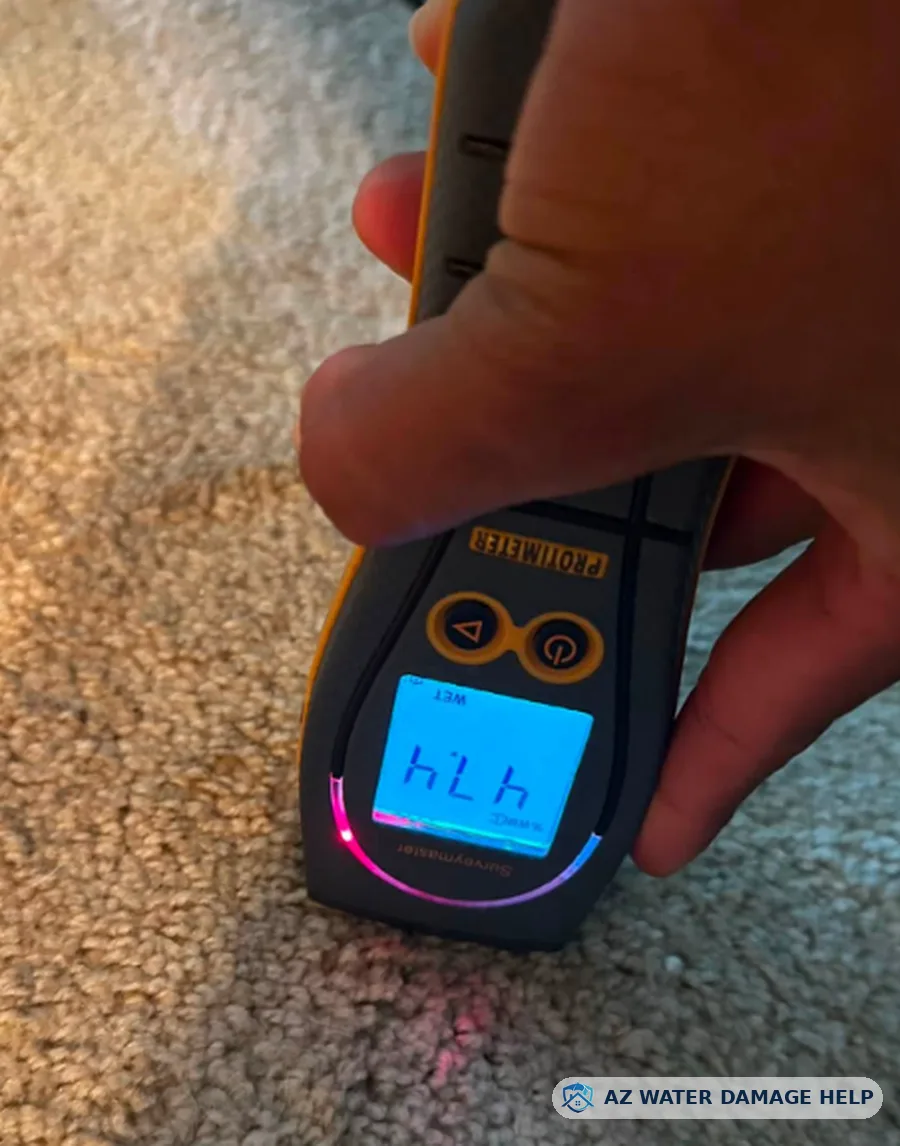
- Do you measure moisture and keep daily drying logs? Readings are how drying is proven.
- Do you follow IICRC standards? The IICRC S500 standard is the industry guide for water damage.
- Who does the repairs after drying? Ask if they rebuild or refer you, and whether that work needs a licensed contractor.
- How do you work with insurance? Good companies document and talk to adjusters, but you stay in control of your claim.
- What will you remove, and why? They should explain each tear-out with a reading or a contamination reason.
- Can you give references or recent reviews? Check them yourself.
What are the red flags?
- Pressure to sign right away, before you see a scope or price.
- An assignment of benefits form presented as required. Read anything you sign carefully.
- No moisture meter, no readings and no drying logs.
- Tearing out large areas without explaining why.
- A price that changes a lot after work starts with no written change.
- Equipment left running for days with nobody checking it.
How do I check a company's credentials in Arizona?
For repair and rebuild work, Arizona generally requires a contractor license from the Arizona Registrar of Contractors, and you can look up a license on the ROC website. For training, ask which technicians hold IICRC certifications such as Water Damage Restoration Technician (WRT) or Applied Structural Drying (ASD). Ask for names and check them directly.
Questions about how an insurer is handling your claim can go to the Arizona Department of Insurance and Financial Institutions, which oversees insurance companies in the state.
What should a written estimate include?
| Item | Why it matters |
|---|---|
| Affected rooms and square footage | Shows the size of the job |
| Water category (1, 2 or 3) | Decides what must be removed |
| Materials to remove | So nothing extra is torn out |
| Equipment and number of days | Main driver of drying cost |
| Antimicrobial or cleaning steps | Needed for gray and black water |
| What is not included | Usually rebuild, flooring and paint |
Compare prices with our water damage restoration cost guide.
Does it matter if the company is local?
It helps. A local crew knows Arizona building styles, from slab homes with soft water heaters in the East Valley to adobe and flat roofs in older towns, and how monsoon season affects scheduling. Distance also affects arrival time, so ask where the crew is coming from. Our office is in Queen Creek, and we tell callers in farther towns an honest arrival window.
What happens on the first visit?
A good first visit includes stopping the source if needed, a walk-through with a moisture meter, photos, water extraction and setting drying equipment. You should leave the visit knowing what was found, what was removed and what happens next. Read the full restoration process step by step.
Dealing with water damage now? Talk to a live person 24/7.
Get Expert Help 24/7(833) 937-0179Frequently asked questions
Do I have to use the company my insurer recommends?
Usually not. In most cases you can choose your own company. Check your policy and tell your insurer who you are using.
What is IICRC certification?
The IICRC is a nonprofit that sets cleaning and restoration standards and certifies technicians, such as the Water Damage Restoration Technician course.
Should I sign an assignment of benefits?
Read it carefully first. It can hand control of parts of your claim to the contractor. You can ask questions and take time before signing.
How fast should a crew arrive?
As fast as possible, but honesty matters more than a promise. Drying should start within 24 to 48 hours to limit mold.
Is the cheapest estimate the best one?
Not always. Compare the scope, the number of drying days and what is excluded, not only the total.

About the author
Noah Miller founded AZ Water Damage Help in Queen Creek to give Arizona homeowners fast, honest water damage help. He writes and updates these guides using public guidance from the EPA, the IICRC, the National Weather Service and Arizona state agencies. More about Noah.
Sources
- IICRC (Institute of Inspection, Cleaning and Restoration Certification)
- Arizona Registrar of Contractors
- Arizona Department of Insurance and Financial Institutions