
The Water Damage Restoration Process: What to Expect, Step by Step
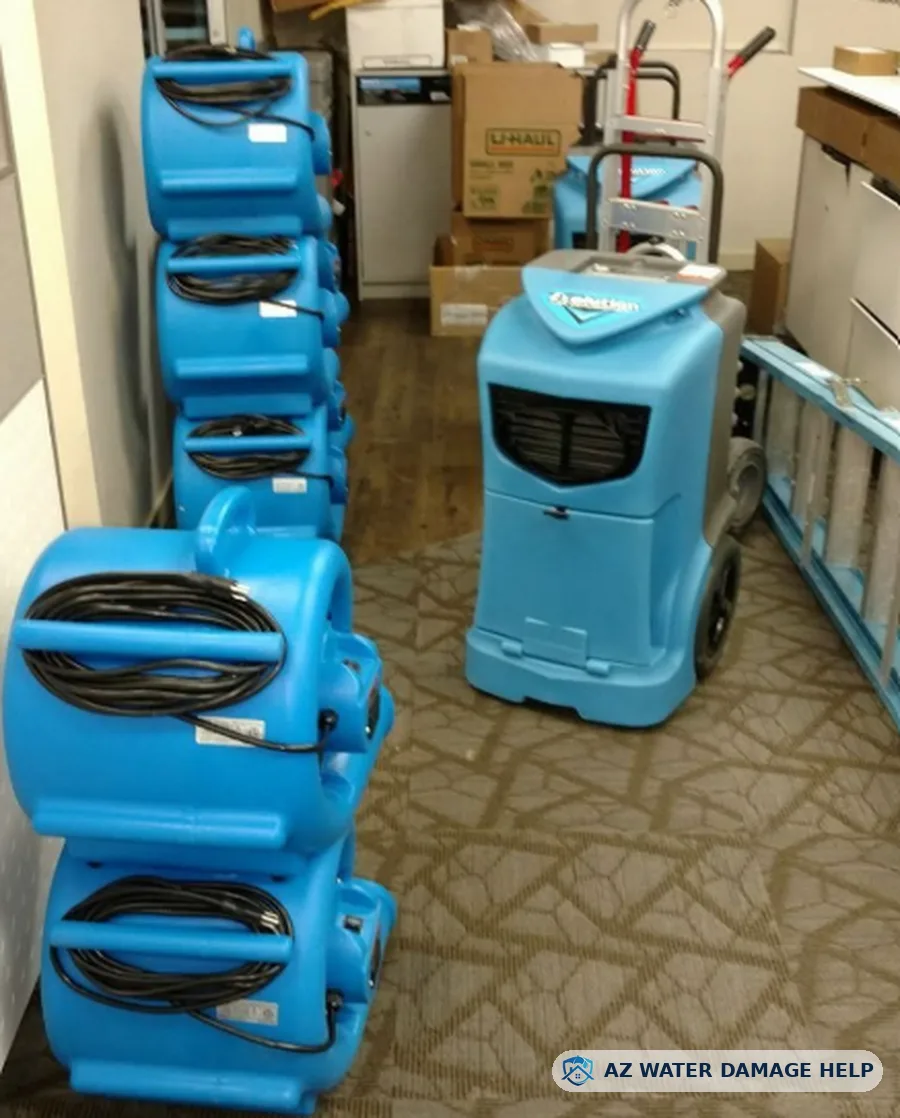
Water damage restoration follows a clear order: stop the water and make the area safe, decide the water category, extract standing water, map hidden moisture, remove what cannot be dried, dry the structure for about three to five days with daily readings, then repair drywall, flooring and cabinets. Drying should start within 24 to 48 hours.
When your home has water damage, it helps to know what comes next. A good restoration job follows the same order every time, whether the water came from a burst pipe, a slab leak or a monsoon storm. This guide walks through each step so you know what to expect and what to ask.
Reading this with water on the floor? Get help first.
Need Help Now? Tap Here(833) 937-0179What are the steps of water damage restoration?
Most jobs follow seven steps: make it safe, identify the water, extract it, find hidden moisture, remove what cannot be saved, dry the structure, and repair. The first five usually happen in the first day. Drying takes a few days. Repairs come last.
| Step | Typical timing (approx.) |
|---|---|
| 1. Call, safety check and stopping the source | First hours |
| 2. Water category and inspection | First visit |
| 3. Water extraction | First visit |
| 4. Moisture mapping | First visit, then daily |
| 5. Removal of materials that cannot be dried | First day or two |
| 6. Drying and dehumidifying | About 3 to 5 days |
| 7. Repairs and rebuild | After drying is confirmed |
Step 1: The call and safety check
When you call our 24/7 line, a real person answers. You will be asked what happened, where the water is and whether it is still flowing. In most of our service area a crew can arrive within one to a few hours, day or night, and you get an arrival window on the call.
Before the crew arrives, shut off the water source and turn off power to wet rooms if you can do it safely. Our burst pipe first-hour guide shows how.
Step 2: What water category is it?
The crew decides if the water is clean (Category 1), gray (Category 2) or black (Category 3), using the IICRC S500 standard most restoration companies follow. The category decides what can be dried and what must go.
- Category 1: clean water, like a broken supply line
- Category 2: gray water, like a washer or dishwasher overflow
- Category 3: black water, like sewage or outside flood water
Sewage needs extra steps, covered in our sewage backup guide.
Step 3: Water extraction
Submersible pumps remove deep water. Extraction wands and weighted extractors pull water out of carpet and pad. Fast extraction is the single biggest factor in keeping repair costs and mold risk down. See our emergency water removal page for details.
Step 4: Moisture mapping
Moisture meters and thermal cameras find hidden wet drywall, cabinets and subfloor. This step matters because water wicks up walls and spreads under flooring where you cannot see it. The readings become the baseline for drying and part of the record for your insurer.
Step 5: Removing what cannot be dried
Some materials dry well and some do not. Soaked carpet pad, swollen particleboard and drywall that lost strength are usually removed. Crews often make flood cuts, a straight cut a short way up the wall, so air can reach the wall cavity.
Anything touched by Category 3 water that is porous is usually removed. Read can wet drywall, carpet and flooring be saved? to see what usually stays and what goes.
Step 6: How long does drying take?
Most homes need three to five days of drying with air movers and dehumidifiers. Dense materials like hardwood, thick drywall and concrete slabs can take longer. Air movers and dehumidifiers are placed and checked daily until materials reach dry goals.
People assume Arizona's dry air will dry a house on its own. Outdoor air is dry, but a closed, air-conditioned house holds the moisture in. Monsoon season (June 15 to September 30) also brings humid air that slows drying. Daily moisture readings show when the job is truly done.
What you can do during drying
- Leave the equipment running, even at night.
- Keep doors and windows as the crew asks.
- Do not move air movers or turn off dehumidifiers.
- Ask to see the daily moisture readings.
Step 7: Repairs and rebuild
Once readings show the structure is dry, repairs start. That can mean new drywall, texture and paint, baseboards, cabinets and flooring. Make sure anyone doing repair work is properly licensed. You can look up contractors with the Arizona Registrar of Contractors.
How does insurance fit into the process?
Call your insurer early, ideally the same day. Take photos before cleanup and keep every receipt. You get a written estimate after an on-site inspection, and we document the work so your insurer can review the claim. Learn more in does Arizona homeowners insurance cover water damage and our insurance claim help page.
Wondering about price? See the ranges in our water damage restoration cost guide. We serve Queen Creek, Casa Grande, Sahuarita, Florence and all of our Arizona service areas.
Dealing with water damage now? Talk to a live person 24/7.
Get Expert Help 24/7(833) 937-0179Frequently asked questions
How long does the whole water damage restoration process take?
Extraction and removal usually happen in the first day. Drying takes about three to five days for most homes. Repairs start once readings show the structure is dry, and their length depends on what was removed.
Can I stay in my home during water damage restoration?
Most families can stay home while drying equipment runs. You may need to leave if the water was dirty, the power is off, or a large part of the home needs repairs. The crew will tell you after the inspection.
Why does the drying equipment have to run day and night?
Air movers and dehumidifiers pull moisture out of walls, floors and cabinets steadily. Turning them off lets moisture settle back in and stretches out the drying time. Daily readings show when they can come out.
What is a flood cut?
A flood cut is a straight cut along the bottom of a wet wall. It removes drywall that wicked up water and lets air reach the wall cavity so framing and insulation can dry. It is patched during repairs.
How fast should water damage restoration start?
Start drying within 24 to 48 hours. The EPA advises drying wet materials in that window to prevent mold growth. Calling right away gives you the best chance to save materials.

About the author
Noah Miller founded AZ Water Damage Help in Queen Creek to give Arizona homeowners fast, honest water damage help. He writes and updates these guides using public guidance from the EPA, the IICRC, the National Weather Service and Arizona state agencies. More about Noah.
Sources
- IICRC (Institute of Inspection, Cleaning and Restoration Certification)
- EPA: Mold
- Arizona Registrar of Contractors