
Can Pipes Freeze in Arizona? Winter Tips to Prevent Water Damage
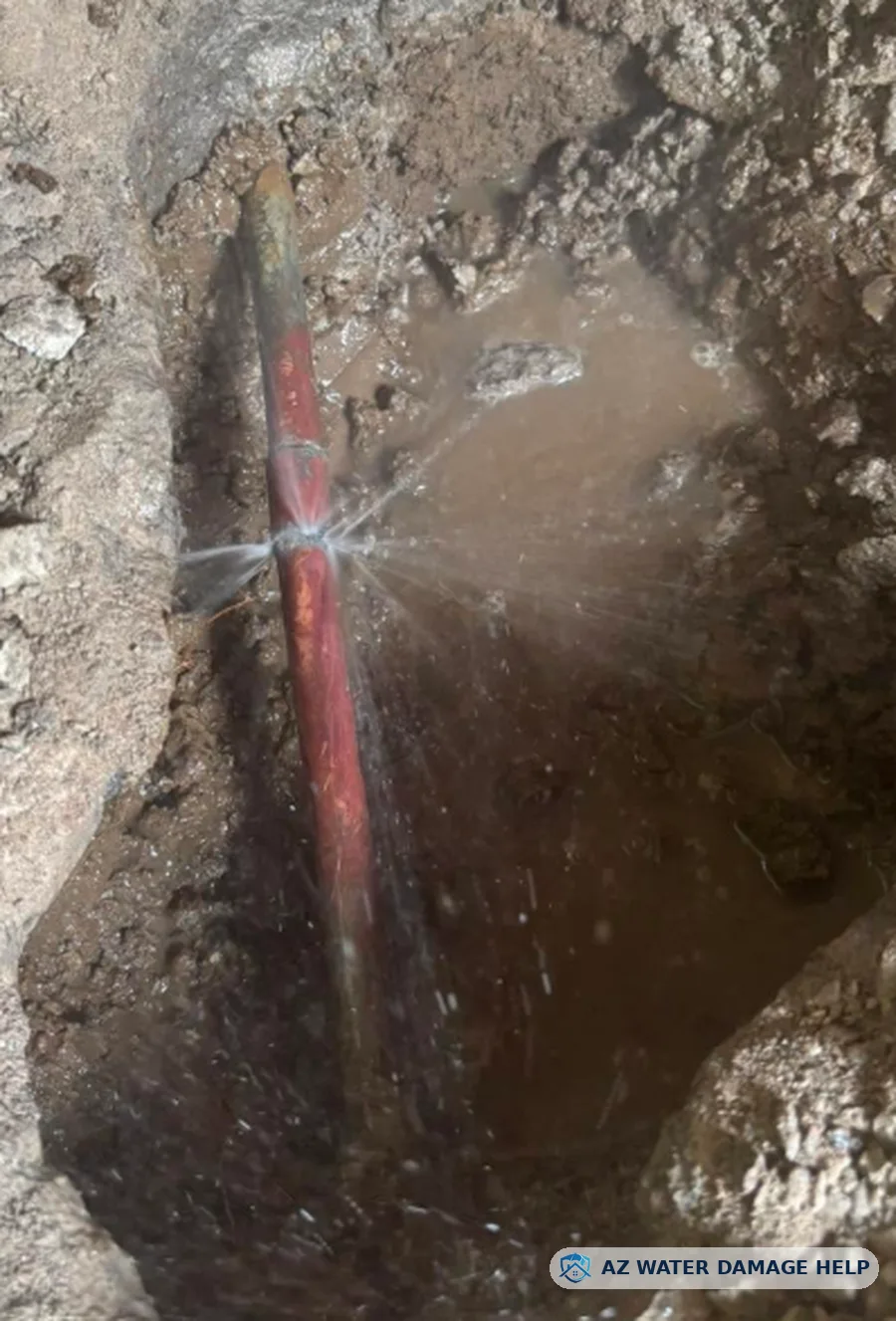
Yes, pipes can freeze in Arizona. In Tucson, Pinal County and the outer Phoenix area, clear winter nights often drop below freezing. Outdoor pipes are most at risk because many Arizona homes run water lines outside, on exterior walls or in the attic with little insulation. Cover hose bibs and backflow valves, wrap exposed pipes and drip faucets on the coldest nights.
Most people do not think of Arizona when they think of frozen pipes. But the desert loses heat fast after sunset. On clear winter nights, Tucson, Marana, Vail, Casa Grande, San Tan Valley and other areas we serve can dip into the 20s. Homes here are built for heat, not cold, so pipes are often exposed. A few cold nights each winter are enough to split a pipe.
Up in the pines, frozen pipes are a winter regular. See our water damage restoration in Prescott page.
Reading this with water on the floor? Get help first.
Need Help Now? Tap Here(833) 937-0179Which pipes freeze first in Arizona homes?
- Backflow preventers and irrigation valves that sit above ground in the yard.
- Hose bibs on outside walls, especially on the north side.
- Water lines on exterior walls or in garages without insulation.
- Attic pipes, common in homes that had a slab leak reroute.
- Pool and spa equipment lines when the pump is off.
- Water softeners and RO lines in an unheated garage.
- The main line where it comes up out of the ground near the house.
How cold does it have to be?
Exposed pipes are at risk when it stays near or below 28 degrees for a few hours. Wind makes it worse. Watch the forecast for a freeze warning or hard freeze warning from the National Weather Service. Those nights are when to take the steps below. Higher areas, such as Oracle, Saddlebrooke and the foothills, freeze more often than the valley floor.
7 steps to protect your pipes on a cold night
- Cover hose bibs with a foam faucet cover. Remove hoses first.
- Wrap the backflow preventer with an insulated bag or towels and a plastic cover.
- Wrap exposed pipes with foam pipe insulation from a hardware store.
- Let a faucet on an outside wall drip slowly on the coldest nights.
- Open sink cabinets on outside walls so warm air reaches the pipes.
- Keep the garage door closed and the house heat at 55 degrees or higher, even if you leave.
- Know where your main water shut-off valve is, and make sure it turns.
Part-time residents should set the heat and shut off the water before leaving for the season. See our guide to protecting a seasonal home.
In Arizona's high country, freezes are routine rather than rare. If you own a home or cabin in Payson, Show Low, Pinetop-Lakeside or on Mount Lemmon, our local pages cover the cold-weather risks there. Closer to Tucson, Oracle and SaddleBrooke freeze more often than the valley floor too.
How do I know if a pipe froze?
A faucet that gives only a trickle, or nothing, on a cold morning may be frozen. Frost on an exposed pipe is another sign. Do not use an open flame to thaw it. Open the faucet, then warm the pipe with a hair dryer or warm towels, starting near the faucet and working back. If you cannot reach the frozen part, or you see a crack or bulge, shut off the water and call for help.
What if a pipe bursts?
Frozen pipes often leak after they thaw, not during the freeze. When the ice melts, water sprays out of the crack. Shut off the main valve right away, turn off power to wet areas if it is safe, and remove water fast. Wet drywall and insulation need drying within 24 to 48 hours. Our guide on what to do when a pipe bursts walks through each step.
Does insurance cover a frozen pipe?
A sudden burst from freezing is often covered. Many policies require that you kept the home heated or shut off the water when away. A pipe that leaked slowly for weeks is treated differently. Take photos and call your agent early. See our guide to Arizona insurance and water damage.
Dealing with water damage now? Talk to a live person 24/7.
Get Expert Help 24/7(833) 937-0179Frequently asked questions
Do pipes really freeze in Tucson?
Yes. Tucson and nearby areas see several nights below freezing most winters. Exposed outdoor pipes and backflow valves are most at risk.
Should I drip my faucets in Arizona?
On nights forecast in the mid-20s or colder, a slow drip on a faucet fed by exposed pipes helps keep water moving so it is less likely to freeze.
What is the box-shaped pipe in my front yard?
That is usually the backflow preventer for the irrigation system. It sits above ground and is one of the first things to freeze.
Can a frozen pipe burst later?
Yes. Many pipes leak when the ice thaws. Check exposed pipes after a cold night and watch for drips or wet spots.
Who do I call for a burst pipe?
Shut off the water first. A plumber fixes the pipe, and a restoration crew removes water and dries the home.

About the author
Noah Miller founded AZ Water Damage Help in Queen Creek to give Arizona homeowners fast, honest water damage help. He writes and updates these guides using public guidance from the EPA, the IICRC, the National Weather Service and Arizona state agencies. More about Noah.
Sources
- National Weather Service Tucson
- EPA WaterSense: Fix a Leak Week
- IICRC (Institute of Inspection, Cleaning and Restoration Certification)