
Leaving for the Summer? How to Protect Your Arizona Home From Water Damage
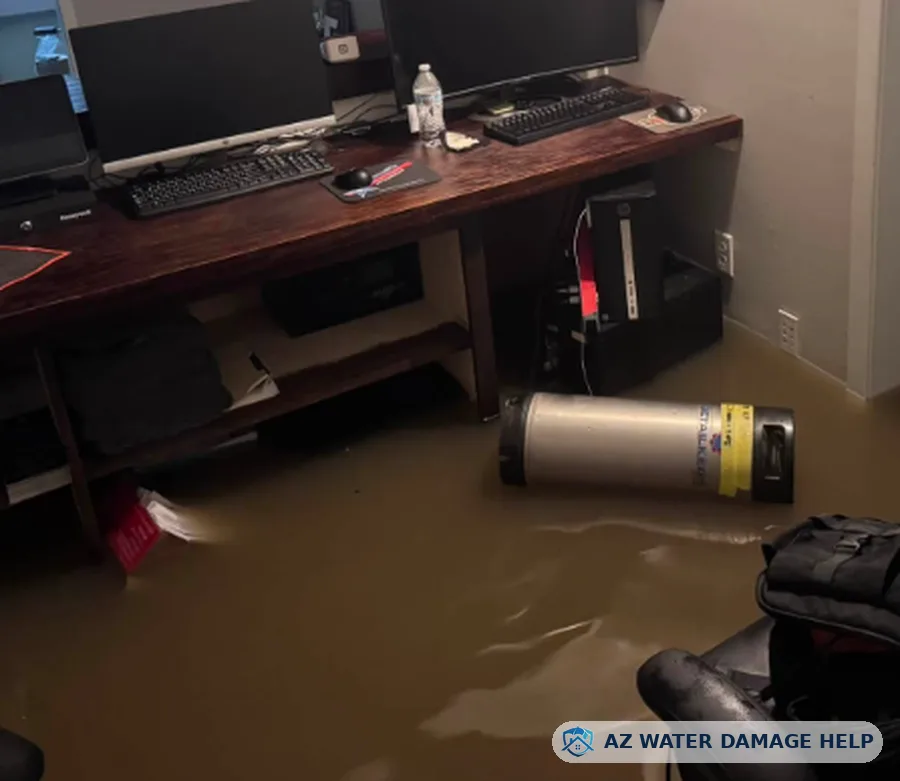
Before leaving your Arizona home for the season, turn off the main water, shut off the water heater, install leak sensors, keep the AC running at a safe setting, clear roof drains before monsoon season, and have someone check inside the home every week. A leak in an empty home can run for weeks before anyone sees it.
Many Arizona homeowners spend part of the year somewhere else. That is normal in places like Green Valley, where a large share of residents spend summers out of state. But an empty home has one big water damage risk: a leak can run for days or weeks before anyone finds it. This checklist helps you leave with peace of mind.
Reading this with water on the floor? Get help first.
Need Help Now? Tap Here(833) 937-0179Why are empty homes at higher risk of water damage?
When nobody is home, nobody hears a drip, sees a puddle or smells a musty room. A small leak that would be caught in an hour can soak drywall, flooring and cabinets for weeks. Summer is also monsoon season, from June 15 to September 30, so storms can bring roof leaks while you are gone.
Older homes add risk too. Many seasonal neighborhoods have aging copper and galvanized lines, original roofs and older water heaters. In attached townhomes, a leak in one unit can spread into the next.
What should you do before you leave?
The single most effective step is turning off the main water. With the water off, a failed hose or fitting has very little water to release.
- Turn off the main water. In many Arizona homes the shutoff is near the front hose bib or in a box near the curb. Make sure it turns fully.
- Drain the lines. Open a low faucet, like an outside hose bib, to empty water left in the pipes.
- Shut off the water heater. Set a gas unit to off or pilot, or switch off the breaker for an electric unit.
- Turn off appliance valves. Close the valves behind the washer, dishwasher and ice maker.
- Plan for irrigation. If your landscape needs water, ask your plumber or landscaper whether irrigation can run on its own line while the house is shut off.
- Keep the AC on. Leave it running at a safe, moderate setting to protect the home from extreme heat. Ask your HVAC technician what setting fits your home.
- Clear the AC drain. Have the condensate line flushed and a float switch installed, so a clog shuts the unit off instead of flooding the ceiling.
- Prep the roof for monsoon. Clean scuppers and gutters, and check roof tiles before you go.
How can you catch a leak while you are away?
Even with the water off, it helps to have eyes on the home. A weekly check catches roof leaks, AC overflows and anything else the shutoff does not stop.
- Leak sensors. Place them near the water heater, washer, dishwasher, fridge and under sinks. Many send an alert to your phone.
- Automatic shutoff valve. Some systems shut off the main water by themselves when a sensor gets wet.
- House watcher or neighbor. Ask someone to check inside the home every week and after big storms.
- Smart thermostat. Lets you see if the AC stops running, which can point to a tripped float switch.
- Water bill alerts. Watch your bill online for any use while the water should be off.
What should your house watcher look for?
Give your house watcher a short list so nothing gets missed. Leave them the location of the main shutoff and our 24/7 number.
| Check | Warning sign |
|---|---|
| Smell when the door opens | Musty or damp odor |
| Ceilings, especially near AC vents | New stains, bubbling paint, drips |
| Floors in kitchen, baths and laundry | Puddles, lifting or cupping flooring |
| Garage around the water heater | Water on the floor, rust |
| Doors and windows after storms | Water inside the door, wet sills |
| Thermostat | House much hotter than the set temperature |
What if a leak is found while you are out of state?
Ask your house watcher to turn off the main water and power to wet rooms if it is safe, then take photos. Call your insurer and a restoration company. Mold can begin within 24 to 48 hours, so drying should not wait for you to fly home.
For seasonal owners, we document everything for insurance claims while you are still out of state. Our emergency water removal crews can extract water and start drying, and you get a written estimate after an on-site inspection. Read how fast mold grows after water damage to see why speed matters.
Does insurance cover water damage in a vacant home?
Most policies cover sudden and accidental water damage, but many have rules for homes that are unoccupied or vacant for a long stretch. Read your policy for vacancy or unoccupied clauses before you leave, and ask your agent what you need to do to stay covered. Learn more in does Arizona homeowners insurance cover water damage.
What should you do when you come back?
- Walk the house and smell for mustiness before turning the water on.
- Turn the main water on slowly and listen for running water.
- Check under sinks, behind toilets and around the washer for drips.
- Turn the water heater back on only after the tank is full.
- Check ceilings for new stains from monsoon storms.
Our monsoon water damage checklist and 9 signs of hidden water damage can help. We serve seasonal homes in Sahuarita, Vail, Arizona City and across our Arizona service areas.
Dealing with water damage now? Talk to a live person 24/7.
Get Expert Help 24/7(833) 937-0179Frequently asked questions
Should I turn off my water when I leave my Arizona home for the summer?
Yes. Turning off the main water is the most effective way to prevent a large leak while you are away. Drain the lines and turn off the water heater too.
Should I leave the AC on in an empty Arizona home?
Yes. Leave it running at a safe, moderate setting to protect the home from extreme heat. Have the condensate line cleared and a float switch installed so a clog shuts the AC off instead of leaking into the ceiling.
How often should someone check my seasonal home?
Every week is a good rule, plus after big monsoon storms. Give them a checklist, the main shutoff location and a number to call 24/7.
What if a leak is found while I am out of state?
Have someone shut off the water and power to wet rooms if safe, take photos, and call your insurer and a restoration company. Drying should start within 24 to 48 hours, so it should not wait for you to return.
Does homeowners insurance cover water damage in a vacant home?
It depends on your policy. Many policies have vacancy or unoccupied clauses that can limit coverage. Read your policy and talk to your agent before you leave.

About the author
Noah Miller founded AZ Water Damage Help in Queen Creek to give Arizona homeowners fast, honest water damage help. He writes and updates these guides using public guidance from the EPA, the IICRC, the National Weather Service and Arizona state agencies. More about Noah.