
Burst Pipe in Your Cabin? Show Low and Pinetop Cleanup Guide
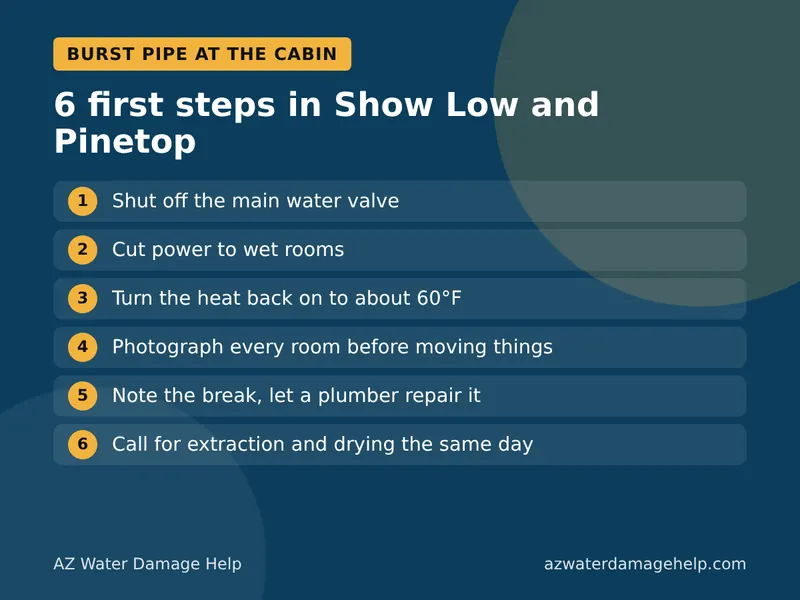
Shut off the main water valve, turn off power to wet rooms, and photograph everything before you move it. Then call a water damage company the same day. In a cabin that sat for days or weeks, water has usually soaked into subfloor, insulation and lower drywall, so drying needs commercial equipment, moisture readings and often some removal.
It is the call every cabin owner in the White Mountains dreads. You open the door after a cold snap and hear water running, or you find the floor soft and the walls stained. A pipe froze while nobody was there, and it has been leaking for hours or days.
This guide is for that moment, whether your place is in Show Low, Pinetop-Lakeside, Heber-Overgaard or a forest road outside Snowflake. It covers what to do in the first hour, why drying a mountain cabin is different from drying a Phoenix house, and what the cleanup usually costs.
Reading this with water on the floor? Get help first.
Need Help Now? Tap Here(833) 937-0179What should you do first when you find a burst pipe at the cabin?
Stop the water, make the cabin safe, and record the damage. Shut the main valve, switch off breakers for any room with wet floors or outlets, and take photos and video before you move anything. Then call a water damage company and your insurer. In a vacant cabin, every hour of delay lets water spread into framing and insulation.
- Shut off the main water. In most White Mountains cabins the valve is where the line enters the house, often in a crawl space hatch, a utility closet or near the water heater. Our guide to the main water shut-off valve shows where to look.
- Cut power to wet areas. If water reached outlets, baseboard heaters or the panel area, turn off the main breaker and do not walk through standing water near live wiring.
- Turn the heat back on. Once power is safe, set the heat to about 60°F. Warm air helps drying and stops other pipes from freezing again.
- Take photos and video. Shoot every room, the broken pipe, ceilings, floors and wet belongings. Your insurer will ask for them.
- Find the break, but do not repair it yet. Note where it is. A plumber needs to fix it, and the adjuster may want to see it.
- Call for help the same day. A crew can pump and vacuum standing water and start drying while you deal with the plumber and the claim.
Why is water damage worse in a vacant mountain cabin?
Because nobody saw it start. A burst pipe in a home where people live gets shut off in minutes. In a cabin that sits empty between weekends, a split line can run for days. The water soaks through the subfloor into the crawl space, wicks up the walls and pools under cabinets, so more material is wet by the time anyone arrives.
Cold also slows natural drying. In winter, nights in the Show Low and Pinetop area often drop well below freezing, according to the National Weather Service in Flagstaff. Cold air holds very little moisture, and an unheated cabin can stay damp for weeks. That is why opening windows alone does not work up here.
| Found after | What is usually wet | Typical work |
|---|---|---|
| A few hours | Floor surface, lower drywall, rugs | Extraction and drying |
| 1 to 2 days | Subfloor, cabinet bases, wall cavities | Extraction, drying, flood cuts |
| 3 days or more | Crawl space, insulation, framing, ceilings below | Removal, structural drying, mold check |
Which pipes burst most often in White Mountains cabins?
The lines that sit near cold air break first. In cabins around Show Low, Pinetop-Lakeside and Heber-Overgaard, that usually means pipes in a vented crawl space, supply lines on exterior walls, hose bibs that were never drained and lines in a garage or mudroom. Older cabins with copper or galvanized pipe and little insulation are at the highest risk.
- Crawl space supply lines: vents left open or skirting that blew loose let freezing air reach bare pipe.
- Kitchen and bath lines on outside walls: a closed cabinet keeps heat away from the pipe.
- Outdoor faucets: a frost-free spigot can still split if a hose was left attached.
- Water heater and pressure tank connections: common in cabins on a well or with the heater in an unheated closet.
- PEX at fittings: PEX itself flexes, but the brass or plastic fittings can crack when ice forms.
The prevention side is covered in our guide on whether pipes can freeze in Arizona. This guide is about what happens after one does.
How does professional drying work in a cold cabin?
A crew first removes standing water with pumps and truck or portable extractors. Then they measure moisture in floors, walls and cabinets, set commercial dehumidifiers and air movers, and keep the cabin heated so the air can carry moisture out. They check readings each day until materials reach dry standard, which usually takes about 3 to 5 days.
Here is what that looks like on a typical cabin job:
- Extraction. Standing water is pulled out of carpet, pad and low spots. If water reached the crawl space, it is pumped out there too.
- Moisture mapping. Meters and thermal cameras show how far water spread inside walls and under flooring.
- Controlled removal. Wet pad, swollen baseboards and soaked drywall below the water line are removed. Wet insulation in the crawl space usually comes out because it holds water for weeks.
- Drying setup. Dehumidifiers and air movers run around the clock, with the heat on. Wood floors and log walls may need special mats or slower drying to avoid cracking.
- Daily checks and records. Readings are logged for your insurer until everything is dry.
If you are not at the cabin full time, ask the crew how they will get in each day and who checks the equipment. Many owners give a lockbox code or a key to a neighbor.
How much does burst pipe cleanup cost in a cabin?
Most burst pipe jobs in Arizona fall between about $1,500 and $5,000 when drying and drywall repair are included. Extraction alone runs about $500 to $1,500, and structural drying about $1,000 to $3,500. A cabin where water ran for days and reached the crawl space can land at the top of that range or above it. If mold has started, removal adds about $1,500 to $4,000.
| Work | Approx. cost |
|---|---|
| Water extraction | $500 – $1,500 |
| Structural drying | $1,000 – $3,500 |
| Burst pipe cleanup with drywall repair | $1,500 – $5,000 |
| Mold removal, if needed | $1,500 – $4,000 |
These are estimates, not quotes. Long drive times to remote cabins, tongue-and-groove pine walls and log construction can change the price. You get a written estimate before work starts. Our burst pipe water damage cleanup page explains what is included.
Will insurance cover a frozen pipe in a second home?
Often, yes, for sudden damage, but second homes have a catch. Many policies exclude freeze damage if the home was vacant and the owner did not keep the heat on or shut off and drain the water. Read the vacancy and freezing sections of your policy, and keep thermostat records, propane receipts or a smart-thermostat log if you have them.
- Call your insurer the same day and get a claim number.
- Keep the broken piece of pipe if the plumber removes it.
- Save receipts for heat, propane and any emergency repairs.
- Ask the drying company for daily moisture logs and photos.
- Do not throw out damaged items until the adjuster has seen them or approved it.
How fast can a crew reach Show Low, Pinetop or Heber?
Response depends on the road and the weather. Crews that cover the high country can usually reach Show Low and Pinetop-Lakeside the same day, and outlying areas like Heber-Overgaard, Snowflake and the forest roads may take a few hours longer after a storm. Call as soon as you find the leak so a crew can be routed to you.
Our show low arizona water damage page covers the town, its neighborhoods and its winter risks. We also offer water damage restoration in Pinetop-Lakeside and the same help for water damage restoration in Heber-Overgaard.
If there is still standing water when you get there, ask for emergency water extraction arizona crews can start that day. Getting the water out fast is the single biggest thing that keeps a cabin job small.
How do you keep it from happening again?
Keep the heat on at about 55°F or higher all winter, or shut off and drain the water before you leave. Add a smart leak sensor with an automatic shutoff, close crawl space vents and fix loose skirting before the first freeze, and drain and cover outdoor faucets. Ask a neighbor to check the cabin after any hard freeze.
- Put a temperature alert on your phone so you know if the furnace or propane runs out.
- Open sink cabinet doors on outside walls during cold snaps.
- Wrap crawl space pipes with foam or heat cable rated for the job.
- Check the roof for ice dams, which cause their own leaks. See our guide to ice dam roof leaks.
Dealing with water damage now? Talk to a live person 24/7.
Get Expert Help 24/7(833) 937-0179Frequently asked questions
What should I do first if a pipe burst in my cabin while I was away?
Shut off the main water valve, switch off power to wet rooms, turn the heat back on once it is safe, and take photos before you move anything. Then call a water damage company and your insurer the same day.
How long does it take to dry out a cabin after a burst pipe?
Most cabins reach dry standard in about 3 to 5 days with commercial dehumidifiers, air movers and the heat on. Jobs where water reached the crawl space, log walls or hardwood can take longer.
Can I just open the windows and let the cabin dry?
Not in winter. Cold mountain air holds very little moisture, so an open, unheated cabin stays damp for weeks. That gives mold time to grow in walls and under floors.
How much does burst pipe cleanup cost in Show Low or Pinetop?
Most burst pipe jobs in Arizona cost about $1,500 to $5,000 with drying and drywall repair. Extraction alone is about $500 to $1,500. Long leaks in vacant cabins can cost more, and mold removal adds about $1,500 to $4,000.
Does homeowners insurance cover a frozen pipe in a vacation cabin?
Often it covers sudden damage, but many policies exclude freeze damage in a vacant home if the heat was off or the water was not shut off and drained. Check the vacancy and freezing sections of your policy.

About the author
Noah Miller founded AZ Water Damage Help in Queen Creek to give Arizona homeowners fast, honest water damage help. He writes and updates these guides using public guidance from the EPA, the IICRC, the National Weather Service and Arizona state agencies. More about Noah.
Sources
- IICRC (Institute of Inspection, Cleaning and Restoration Certification)
- EPA: Mold
- National Weather Service Flagstaff