
Water Stain on Your Ceiling? Causes and What to Do in Arizona
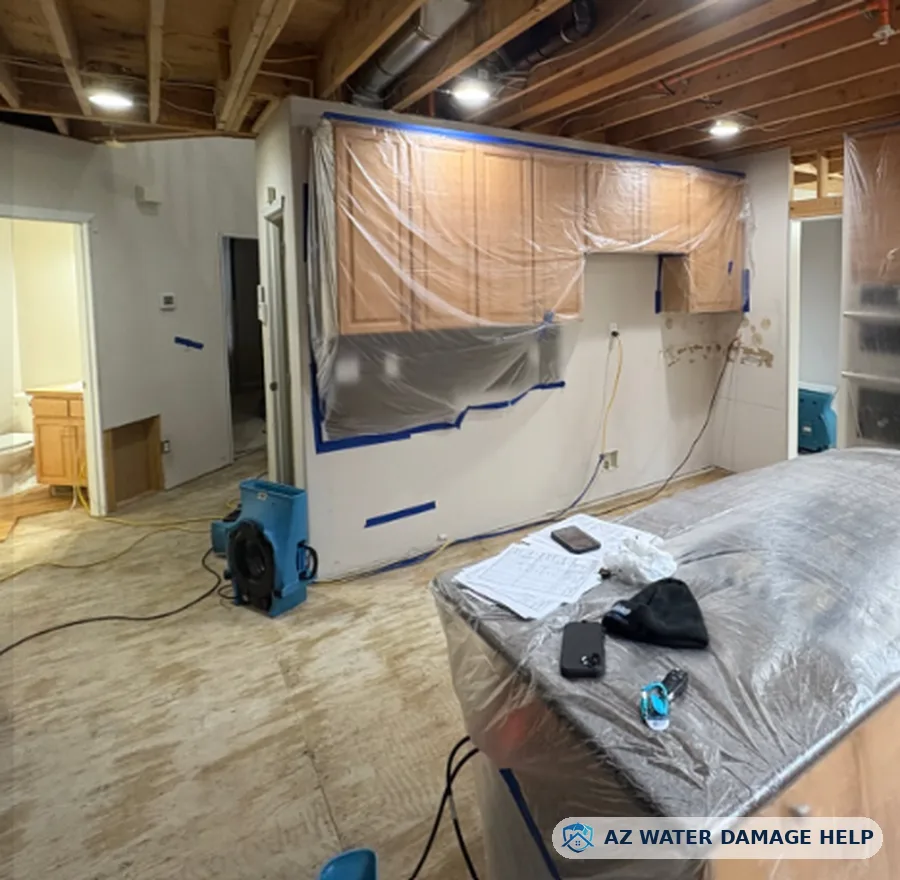
A brown or yellow ceiling stain means water has collected above the drywall. In Arizona the usual sources are monsoon roof leaks, an overflowing AC drain pan in the attic, a swamp cooler on the roof, or an upstairs bathroom. Find and stop the source, dry the attic and drywall, then repair and paint.
A ceiling stain is easy to ignore. It is small, it is up high, and it often looks dry. But a stain is a sign that water reached the back of your drywall, and in many cases more water is still sitting in the insulation above it. This guide explains what causes ceiling stains in Arizona homes and what to do about them.
Reading this with water on the floor? Get help first.
Need Help Now? Tap Here(833) 937-0179What does a water stain on the ceiling mean?
A ceiling stain means water traveled across the top of the drywall and soaked through. The brown or yellow ring is left by minerals and dirt the water carried. The stain often shows up away from the real leak, because water runs along joists, pipes and insulation before it drips down.
A dry-looking stain does not prove the leak has stopped. Insulation above it can stay wet for days, and a slow leak can soak the same spot over and over.
What causes ceiling leaks in Arizona homes?
Most Arizona ceiling leaks come from the roof or from equipment in the attic. Because so many homes have the air handler, water heater or supply lines up there, a leak in the attic shows up in the ceiling first.
| Source | Clues |
|---|---|
| Monsoon rain through cracked tiles or worn underlayment | Stain appears or grows after a storm |
| Flat roof leaks and clogged scuppers | Stains near exterior walls on flat-roof homes |
| AC condensate line or drain pan overflow | Stain near the air handler or a vent, AC shuts off on its own |
| Evaporative (swamp) cooler on the roof | Stain under or near the cooler, often in summer |
| Upstairs toilet, tub or shower | Stain under a bathroom, grows after showers |
| Water heater or supply lines in the attic | Stain grows any time, rain or not |
AC leaks are common here because systems run most of the year. Our guide on water heater and AC drain leaks covers the warning signs. For storm leaks, see the monsoon water damage checklist.
Is a wet or sagging ceiling dangerous?
Yes. Wet drywall is heavy and can fall without warning. If the ceiling sags, bubbles or drips, treat the room as unsafe until the water is out and the drywall has been checked.
- Clear the room. Keep people and pets out from under the wet spot.
- Cut power to that area. Turn off ceiling lights and fans in that room at the breaker.
- Catch the water. Put a bucket or tote under the low spot, with towels around it.
- Move valuables. Get furniture, rugs and electronics out of the drip zone.
- Do not poke a hole unless the room is clear and you can catch the water.
- Stop the source. Shut off the AC if the drain pan is overflowing, or the water if a pipe is leaking.
- Take photos of the ceiling, the attic if you can safely see it, and anything damaged.
Can you just paint over a ceiling water stain?
Only after the leak is fixed and the drywall and attic are fully dry. If you paint too soon, the stain bleeds through and mold can grow above it. A stain-blocking primer helps only once the moisture is gone.
Painting a stain without drying the space first usually leads to mold and a stain that comes back. Read how fast mold grows after water damage to see why timing matters.
When does a ceiling need to be replaced?
Small stains on firm drywall can often be dried, sealed and painted. Drywall that sagged or crumbles should be replaced. Here is a simple way to think about it.
- Usually dry and repaint: a small stain, firm drywall, clean water, dried quickly
- Usually cut out and replace: sagging, soft or crumbling drywall, seams pulling apart, or visible mold
- Always remove: soaked insulation above the leak, and anything touched by dirty water
Not sure what can stay? Our guide on whether wet drywall, carpet and flooring can be saved goes deeper.
What does ceiling leak restoration include?
The crew checks the attic, removes soaked insulation, dries the joists and decking with air movers and dehumidifiers, and replaces drywall that lost strength. A roofer or HVAC technician repairs the source. Then the ceiling is patched, textured and painted.
Ceiling drywall usually takes two to four days to dry with fans and dehumidifiers, longer if insulation stayed wet. See every step in the water damage restoration process, or visit our ceiling and roof leak damage page.
Does insurance cover a ceiling leak?
Rain that enters through a storm-damaged roof is often covered by homeowners insurance. A sudden pipe or appliance failure in the attic is usually covered too. Slow leaks, worn-out roofs and poor maintenance are usually excluded. Your adjuster decides, so photograph the damage and call your insurer early. See our insurance claim help page.
How can you prevent ceiling leaks?
- Clean roof scuppers and gutters before June and check roof tiles.
- Have the AC condensate line cleared and a float switch added.
- Replace rusted drain pans under the air handler.
- Check swamp cooler pads, lines and the pan before each cooling season.
- Re-caulk tubs and showers on upper floors when the caulk cracks.
- Look in the attic once or twice a year for stains or damp insulation.
We dry and repair ceilings in San Tan Valley, Maricopa, Marana, Vail and across our Arizona service areas.
Dealing with water damage now? Talk to a live person 24/7.
Get Expert Help 24/7(833) 937-0179Frequently asked questions
Can I just paint over a ceiling water stain?
Only after the leak is fixed and the drywall and attic are fully dry. Otherwise the stain bleeds through and mold can grow above it.
How long does ceiling drywall take to dry?
Usually two to four days with fans and dehumidifiers, longer if insulation stayed wet. Drywall that sagged or crumbles should be replaced.
Why does my AC leak through the ceiling?
A clogged condensate line or rusted drain pan in the attic overflows. It is common in Arizona because ACs run most of the year. Have an HVAC technician clear the line and add a float switch.
Why did the stain show up far from the leak?
Water runs along joists, pipes and insulation before it soaks through the drywall. The stain marks where it finally dripped down, not always where it got in. A crew uses moisture meters and thermal imaging to trace it.
Is a sagging ceiling an emergency?
Yes. Wet drywall is heavy and can fall without warning. Keep people and pets out of the room, put a bucket under the low spot, turn off power to ceiling lights and fans in that area, and call for help.

About the author
Noah Miller founded AZ Water Damage Help in Queen Creek to give Arizona homeowners fast, honest water damage help. He writes and updates these guides using public guidance from the EPA, the IICRC, the National Weather Service and Arizona state agencies. More about Noah.
Sources
- EPA: Mold
- Arizona Department of Insurance and Financial Institutions
- IICRC (Institute of Inspection, Cleaning and Restoration Certification)