
Can Wet Drywall, Carpet and Flooring Be Saved After Water Damage?
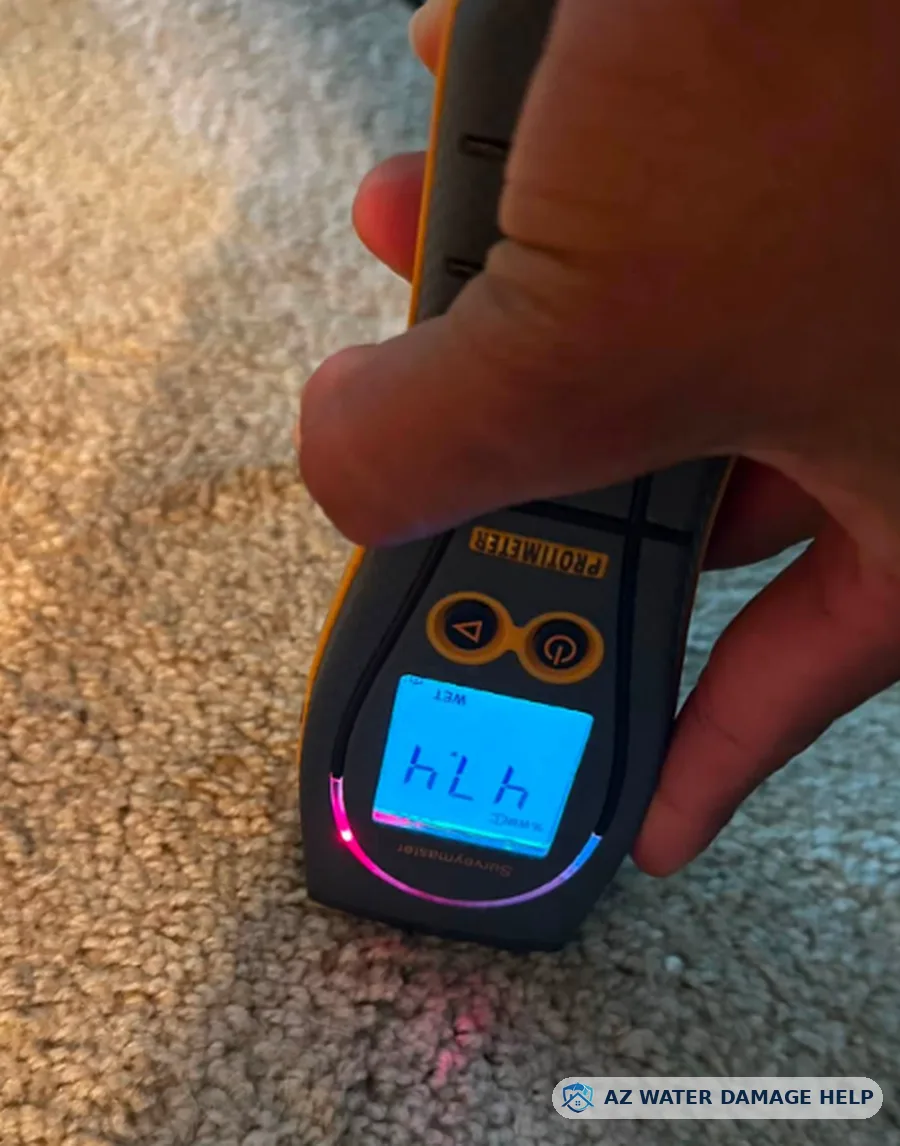
Often yes, if the water was clean and drying starts within 24 to 48 hours. Firm drywall, carpet, tile and many hardwood floors can usually be dried. Carpet pad, particleboard and drywall that sags or crumbles usually must be replaced. Anything porous touched by sewage or outside flood water is usually removed.
After a leak, one of the first questions is what you can keep. Nobody wants to tear out good flooring or walls. The answer depends on three things: how dirty the water was, how long it sat, and what the material is made of. This guide walks through the most common materials in Arizona homes.
Reading this with water on the floor? Get help first.
Need Help Now? Tap Here(833) 937-0179What decides whether a wet material can be saved?
Three things decide it: the water category, the time the material stayed wet, and how porous it is. Clean water caught early gives you the best odds. Dirty water or a slow leak that ran for weeks usually means more has to go.
- Water category. Clean (Category 1), gray (Category 2) or black (Category 3), using the IICRC S500 standard.
- Time. Mold can begin within 24 to 48 hours on wet drywall, carpet pad, wood and insulation.
- Material. Hard, sealed surfaces dry well. Soft, layered or pressed materials hold water and break down.
Material by material: dry it or replace it?
This table shows what usually happens with clean water that is caught early. Dirty water or long exposure moves most items toward replacement. A moisture meter, not a guess, should make the final call.
| Material | Usually |
|---|---|
| Drywall (firm, clean water) | Dry in place, sometimes with small holes or flood cuts |
| Drywall (sagging, soft, crumbling or moldy) | Replace |
| Insulation (wet) | Replace |
| Carpet (clean water) | Often dried and cleaned |
| Carpet pad | Usually replaced |
| Tile and sealed concrete | Dry well, check grout and the slab below |
| Solid hardwood | Can often be dried, may cup or need refinishing |
| Laminate | Usually replaced if water got under or into it |
| Luxury vinyl plank | Surface survives, but water trapped below may require lifting |
| Particleboard cabinets and bases | Usually replaced if swollen |
| Solid wood cabinets | Can often be dried |
Can wet drywall be saved?
Yes, if it stays firm and the water was clean. Crews dry it in place with air movers and dehumidifiers, sometimes drilling small holes or making flood cuts so air reaches the wall cavity. Drywall that sags, feels soft, crumbles or shows mold should be replaced.
Ceilings follow the same rule. See water stain on your ceiling for ceiling-specific steps.
Can wet carpet be saved?
Carpet soaked by clean water can often be dried and cleaned if extraction starts quickly. The pad underneath is a different story. It acts like a sponge, is hard to dry fully and is cheap to replace, so it is usually removed. Carpet and pad soaked by sewage or outside flood water are removed.
What about hardwood, laminate and vinyl floors?
Solid hardwood can often be dried with special drying mats and dehumidifiers, though it may cup and need sanding. Laminate has a pressed core that swells, so it is usually replaced once water gets under or into it. Luxury vinyl plank holds up on top, but water trapped underneath can keep the slab or subfloor wet and lead to mold.
Many Arizona homes sit on concrete slabs. Water that soaks in from a leak under the floor needs the slab dried, too. If flooring is damp with no clear source, read 8 signs of a slab leak or see our slab leak water damage page.
Can cabinets be saved after a leak?
Many kitchen and bath cabinets have particleboard bases and toe kicks. Once particleboard swells, it does not shrink back, so it is usually replaced. Solid wood cabinets can often be dried. Crews may remove the toe kick to dry under the cabinet and check the wall behind it.
Why does dirty water change everything?
Sewage is Category 3 (black) water that contains bacteria and viruses. Outside flood water is treated the same way because it carries soil, bacteria and chemicals. Porous items it touched, like carpet, pad, drywall and upholstered furniture, are usually removed rather than dried. Hard items can often be cleaned and disinfected. See our sewage backup cleanup page.
Why does speed matter so much?
The faster water is extracted and drying starts, the more you can keep. The EPA advises drying wet materials within 24 to 48 hours to prevent mold growth. After that, materials that could have been dried often need to be removed. Our guide on how fast mold grows explains the timeline, and the restoration process shows what happens step by step.
Before anything is thrown away
- Take photos and video of every damaged item.
- Keep a sample of removed carpet and pad if your insurer asks for one.
- Ask for the moisture readings that support each removal.
- Do not throw out damaged items until your adjuster says it is OK.
We dry and restore homes in Green Valley, Eloy, Coolidge, Arizona City and across our Arizona service areas.
Dealing with water damage now? Talk to a live person 24/7.
Get Expert Help 24/7(833) 937-0179Frequently asked questions
Can drywall be saved after getting wet?
Yes, if it stays firm and the water was clean. It can be dried in place with air movers and dehumidifiers. Drywall that sags, feels soft, crumbles or shows mold should be replaced.
Do I need to replace carpet pad after a leak?
Usually yes. Pad acts like a sponge and is hard to dry fully, so it is normally replaced even when the carpet above it can be dried and cleaned.
Can laminate flooring be dried?
Rarely. Laminate has a pressed core that swells when water gets under or into it, and it does not shrink back. It is usually replaced.
How do I know if something is really dry?
A moisture meter tells you, not touch. Materials can feel dry on the surface while the inside or the back is still wet. Ask the crew for daily moisture readings.
What happens to items touched by sewage or flood water?
Porous items like carpet, pad, drywall, mattresses and upholstered furniture are usually removed. Hard items can often be cleaned and disinfected. Photograph everything before removal.

About the author
Noah Miller founded AZ Water Damage Help in Queen Creek to give Arizona homeowners fast, honest water damage help. He writes and updates these guides using public guidance from the EPA, the IICRC, the National Weather Service and Arizona state agencies. More about Noah.
Sources
- EPA: Mold
- IICRC (Institute of Inspection, Cleaning and Restoration Certification)
- Arizona Department of Insurance and Financial Institutions