
Water Damage at Your Business: What Arizona Owners and Managers Should Do
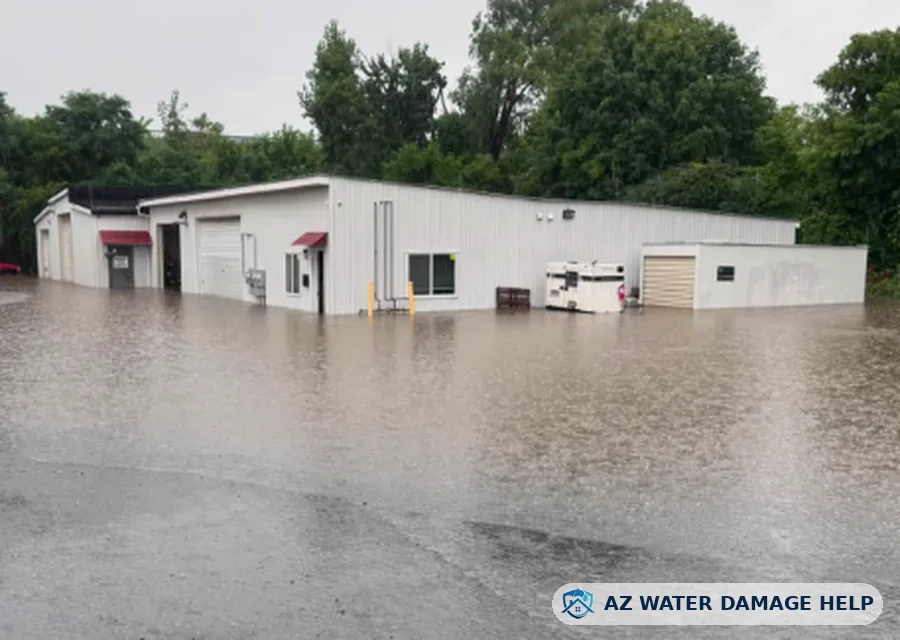
If water damage hits your business, keep people safe first: stop the water, cut power to wet areas, and close off the space. Move records, inventory and equipment out of the water, photograph everything, and call your insurer and a restoration company. Drying should start within 24 to 48 hours to limit mold and downtime.
Water damage at a business is about more than wet floors. It can close your doors, damage stock and records, and put staff and customers at risk. AZ Water Damage Help provides 24/7 water damage restoration for Arizona homes and businesses. This guide covers the first steps for offices, stores, restaurants and rental properties.
Reading this with water on the floor? Get help first.
Need Help Now? Tap Here(833) 937-0179What should you do first when water damage hits your business?
Protect people first, then stop the water, then protect property. The order matters because wet floors and live power are the biggest risks in the first minutes.
- Keep people safe. Move staff and customers away from wet areas, sagging ceilings and slick floors.
- Stop the water. Close the main shutoff or the valve for the fixture, or call building maintenance.
- Cut power to wet areas at the breaker if you can reach it without stepping in water.
- Close off the space. Post signs and block entry to wet rooms.
- Protect key items. Lift records, computers, inventory and equipment off the floor.
- Document everything. Take photos and video before cleanup, and note the time the loss started.
- Make the calls. Call your insurer, your landlord or property manager, and a restoration company.
What causes water damage in commercial buildings in Arizona?
Many of the same problems that hit homes also hit businesses, often on a larger scale.
- Burst supply lines, failed fittings and water heaters
- Flat roof leaks and clogged scuppers during monsoon storms
- Storm water flowing in at doors and loading areas
- AC condensate lines and drain pans overflowing above ceiling tiles
- Sewer backups in restrooms and kitchens
- Leaks from a neighboring unit in a shared building
Arizona's monsoon season runs from June 15 to September 30. Our monsoon water damage checklist covers storm prep.
How is commercial water damage restoration different?
The steps are the same as in a home: extraction, moisture mapping, removing what cannot be dried, drying and repairs. The difference is scale and planning around your operations.
| Factor | What changes at a business |
|---|---|
| Area | Larger spaces need more air movers and dehumidifiers |
| Containment | Wall containment keeps work areas separate from open areas |
| Materials | Commercial carpet, ceiling tiles and built-in fixtures |
| Scheduling | Work may be planned around business hours |
| Coordination | Owner, tenant, property manager and insurers may all be involved |
| Records | Detailed moisture logs and photos for claims and lease issues |
See each step in the water damage restoration process. Most buildings need several days of drying with daily moisture readings.
What about water in a restaurant or food business?
Water from a sewer backup or outside flood is Category 3 (black) water. In any space that handles food, treat it seriously. Porous materials it touched are usually removed, and hard surfaces are cleaned and disinfected. Check with your local health department about reopening rules. Read what to do after a sewage backup.
Does business insurance cover water damage?
Commercial property policies vary widely. Many cover sudden and accidental water damage, and some include business interruption coverage for lost income while you are closed. Outside flood water usually needs separate flood coverage. Ask your agent what your policy covers, and call early.
- Photograph damage, stock and equipment before anything is moved or thrown away.
- Keep a list of damaged inventory with values.
- Track lost hours and extra expenses if you have business interruption coverage.
- Save every receipt, invoice and moisture log.
We document the work so your insurer can review the claim. See our insurance claim help page.
How can you prepare your business before a leak?
- Make sure staff know where the main water shutoff and electrical panel are.
- Keep records and electronics off the floor in back rooms.
- Clean roof scuppers and drains before monsoon season.
- Install leak sensors near water heaters, restrooms and break rooms.
- Keep a 24/7 restoration number with your emergency contacts.
- Have a plan for where to work if part of the space is closed.
What does commercial water damage cost?
Cost depends on square footage, water category and repairs. You get a written estimate after an on-site inspection. Our water damage restoration cost guide shows typical ranges by job type.
We help businesses and property managers in Casa Grande, Queen Creek, Marana, San Tan Valley and across our Arizona service areas.
Dealing with water damage now? Talk to a live person 24/7.
Get Expert Help 24/7(833) 937-0179Frequently asked questions
Do you handle water damage for businesses?
Yes. AZ Water Damage Help provides 24/7 water damage restoration for Arizona homes and businesses, including extraction, drying, mold and repairs.
Can my business stay open during water damage restoration?
Sometimes. Containment can close off the affected area while other parts stay open. It depends on the size of the loss, the water category and safety. The crew will tell you after the inspection.
Who is responsible for water damage in a leased space?
It depends on your lease and where the water came from. Notify your landlord or property manager right away, document everything, and check your lease and your insurance policy.
Does business insurance cover lost income from water damage?
Some commercial policies include business interruption coverage for lost income while you are closed. Coverage varies widely, so ask your agent and track lost hours and extra expenses.
How fast should drying start at a business?
Start drying within 24 to 48 hours. The EPA advises drying wet materials in that window to prevent mold growth, and fast drying also shortens downtime.

About the author
Noah Miller founded AZ Water Damage Help in Queen Creek to give Arizona homeowners fast, honest water damage help. He writes and updates these guides using public guidance from the EPA, the IICRC, the National Weather Service and Arizona state agencies. More about Noah.
Sources
- Ready.gov: Business preparedness
- EPA: Mold
- IICRC (Institute of Inspection, Cleaning and Restoration Certification)