
Condo or Townhome Water Damage in Arizona: Who Pays?
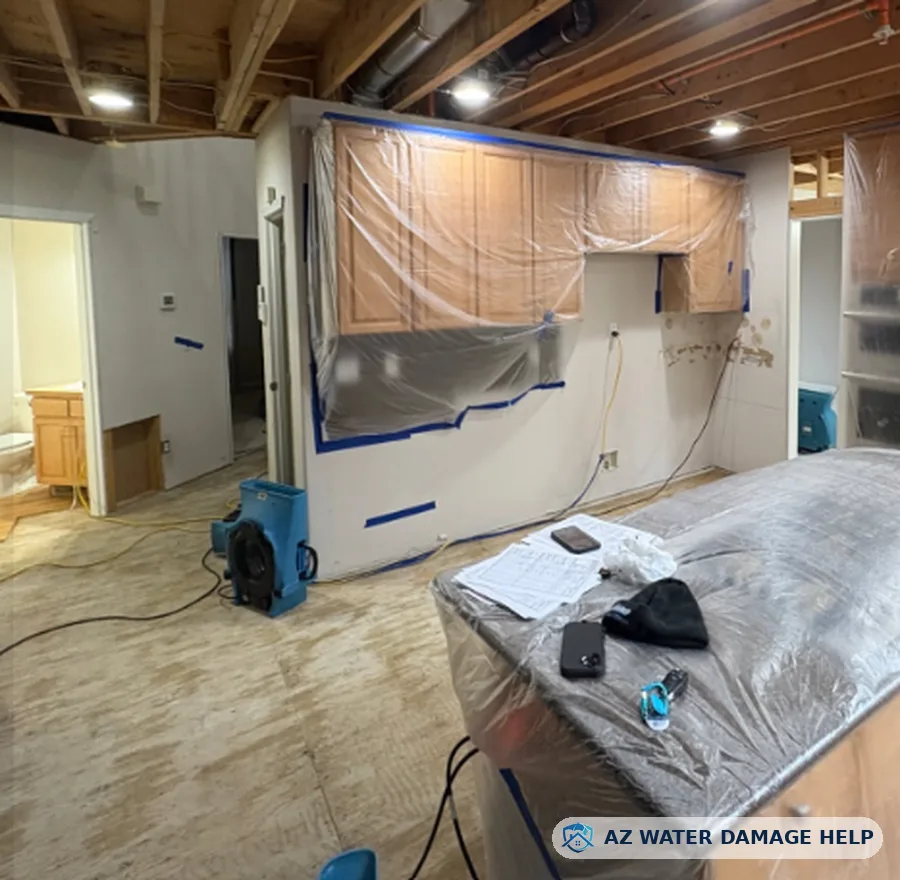
In an Arizona condo or townhome, who pays for water damage depends on three things: your HOA's CC&Rs, the HOA master insurance policy and your own HO-6 policy. As a rule, the HOA covers common elements and the building shell, while owners cover their unit's interior and belongings. Where the leak started and whether someone was careless also matter. Stop the water and dry out first, then sort out the bill.
Condos and townhomes share walls, ceilings and pipes. When a water heater bursts upstairs or a shared pipe leaks in the wall, the water does not stop at the property line. Three parties may be involved: you, your neighbor and the homeowners association. This guide explains how the cost is usually split in Arizona, and what to do in the first hours so the drying is not held up by the argument over who pays.
If water is still on the floor, our water removal service Arizona crews can start extraction day or night while the paperwork gets sorted.
For the full picture of what policies pay, read does insurance cover water damage in Arizona.
Near ASU, stacked condos and apartments make this question common. See our water damage restoration in Tempe page for local details.
Reading this with water on the floor? Get help first.
Need Help Now? Tap Here(833) 937-0179Who is responsible for water damage in an Arizona condo?
Your HOA's CC&Rs (covenants, conditions and restrictions) set the rules. Most split the building into common elements, which the HOA maintains and insures, and units, which owners maintain and insure. The line between them, often drawn at the drywall, is spelled out in the declaration. Read it first; it decides most claims.
| What was damaged or leaked | Usually covered by |
|---|---|
| Roof, exterior walls, shared main lines | HOA and its master policy |
| Pipes and fixtures serving only your unit | Unit owner |
| Interior finishes: flooring, cabinets, paint | Owner's HO-6, or master policy if "all-in" |
| Your furniture and belongings | Your HO-6 or renter's policy |
| Damage caused by a neighbor's appliance | Often the neighbor or their HO-6 |
What is the difference between a master policy and an HO-6?
The HOA's master policy covers the building and common areas. Some master policies are "bare walls," covering only the structure. Others are "all-in," covering original interior finishes too. Your HO-6 condo policy fills the gaps: upgrades, interior finishes, belongings, loss of use and often the master policy deductible if it is passed to you. Ask your HOA manager for a copy of the master policy summary.
For a plain-language look at what policies cover, see our guide on whether Arizona homeowners insurance covers water damage. If you rent the unit, read the renter's guide instead.
What should I do first when water comes through a shared wall or ceiling?
Safety and speed come first; paperwork comes second. Water that sits for a day or two in drywall and subfloor can start mold, and that makes every party's bill bigger. Many HOAs expect owners to limit damage, so waiting can hurt your claim.
- Stop the water. Knock on the neighbor's door, or call the HOA's emergency line to shut off a shared valve.
- Stay safe. Keep out of rooms where a ceiling sags or water is near outlets.
- Take photos and video of the source, the water and every damaged item.
- Notify the HOA in writing by email the same day, with photos.
- Call your HO-6 insurer to open a claim, even if you think the HOA will pay.
- Start drying. Get water extraction and drying going; keep the moisture logs and invoices.
Our 24/7 water extraction crews can start drying while the HOA and insurers work out who pays.
What if my neighbor's leak damaged my unit?
If the leak came from something that serves only their unit, such as a toilet supply line, washer hose or water heater, the cost often falls on the neighbor or their HO-6 insurer. If they were careless, such as leaving a tub running, that is even clearer. If a shared pipe failed, it is usually the HOA's job. Your insurer can pursue the other party for you through a process called subrogation.
A ceiling stain below a neighbor's bathroom is a common first sign. Our ceiling water stain guide explains what to look for.
Who pays for mold after a condo leak?
Mold that grows because the leak was dried quickly and properly is often treated as part of the water claim. Mold from a slow leak that went on for weeks is often excluded, and the party who ignored it may be held responsible. That is one more reason to start drying fast and to report leaks in writing.
If you see spots or smell mustiness after a shared leak, ask about water damage mold removal and keep the report for the HOA.
How can I avoid a dispute next time?
Read your CC&Rs and master policy summary once a year, carry an HO-6 with enough coverage for the master policy deductible, replace rubber washer hoses and toilet supply lines with braided ones, and put a leak alarm under the water heater. Ask the HOA when shared lines were last inspected.
Questions about Arizona insurance rules can go to the state Department of Insurance and Financial Institutions. For a rough idea of drying costs before you talk to adjusters, see our water damage restoration cost guide.
Dealing with water damage now? Talk to a live person 24/7.
Get Expert Help 24/7(833) 937-0179Frequently asked questions
Is the HOA responsible for water damage inside my condo?
It depends on your CC&Rs and the master policy. Many HOAs cover the structure and common pipes, while owners cover interior finishes and belongings.
Do I need HO-6 insurance if my HOA has a master policy?
Most owners do. The master policy rarely covers your belongings, upgrades or the deductible that may be passed to you.
My upstairs neighbor flooded my unit. Who pays?
Often the neighbor or their HO-6 insurer, if the leak came from their own fixture or appliance. Your insurer can pay you and then seek the money from them.
Should I wait for the HOA before drying my unit?
No. Notify them in writing and start drying. Waiting can lead to mold and can weaken your claim.

About the author
Noah Miller founded AZ Water Damage Help in Queen Creek to give Arizona homeowners fast, honest water damage help. He writes and updates these guides using public guidance from the EPA, the IICRC, the National Weather Service and Arizona state agencies. More about Noah.
Sources
- Arizona Department of Insurance and Financial Institutions
- EPA: Mold
- IICRC (Institute of Inspection, Cleaning and Restoration Certification)