
9 Signs of Hidden Water Damage in Walls and Floors
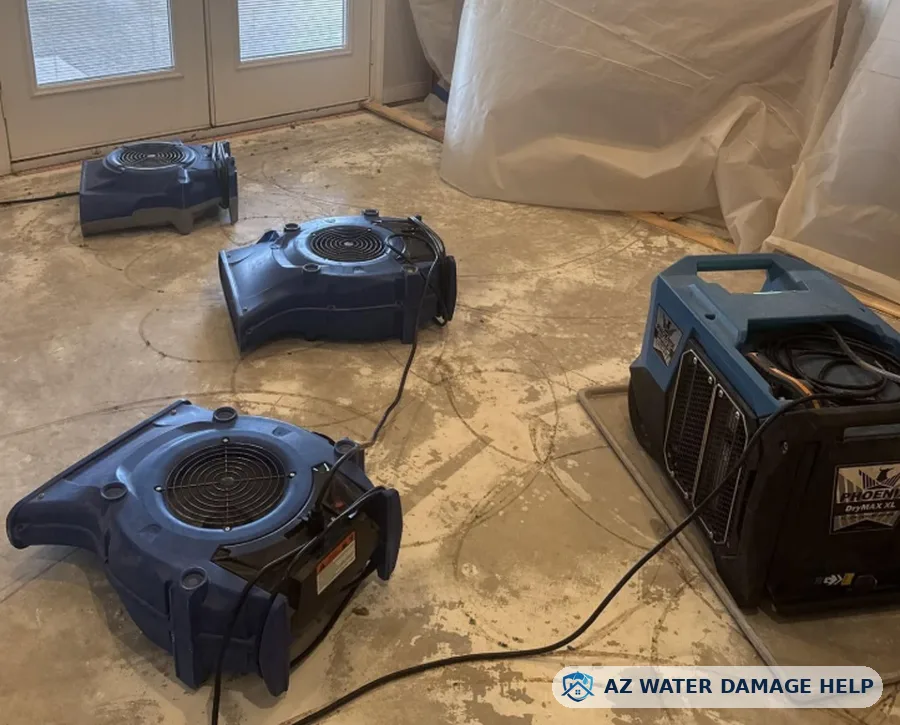
Common signs of hidden water damage are a musty smell, bubbling or peeling paint, soft or stained baseboards, warped or cupping floors, loose tile, new stains on walls or ceilings, and a water meter that moves with everything off. In Arizona, slow leaks hide well because the dry air keeps surfaces looking normal while walls stay wet inside.
Not every leak makes a puddle. Many leak slowly inside a wall, under a cabinet or beneath the floor for weeks. By the time you see it, the drywall, subfloor or cabinet base may already be ruined. This guide shows the warning signs of hidden water damage and how to check your home today.
Reading this with water on the floor? Get help first.
Need Help Now? Tap Here(833) 937-0179What are the signs of hidden water damage?
Hidden water damage shows up as small changes you can see, smell or feel. One sign alone may be nothing. Two or three together, in the same area, usually mean water is getting somewhere it should not.
- A musty or earthy smell that does not go away, often in a closet, bathroom or under a sink.
- Bubbling, peeling or cracking paint or wallpaper, often low on a wall.
- Soft, swollen or stained baseboards that pull away from the wall.
- Warped, cupping or soft flooring, or laminate seams that lift.
- Loose tile or dark, damp grout that stays dark after the floor dries.
- New stains on ceilings or walls, often with a brown ring.
- A higher water bill with no change in how you use water.
- A water meter that moves with every faucet and appliance off.
- Mold spots on walls, inside cabinets or around windows.
Why does water damage hide so well in Arizona?
Outdoor air in Arizona is dry, so surfaces often look normal. But a closed, air-conditioned house holds moisture inside walls, under flooring and in attics. Water wicks up drywall and soaks into the concrete slab, where it can stay wet for a long time.
Many homes here are built on slabs, so a leak under the floor shows up in flooring first. Hard water also wears out supply lines, valves and fittings faster, which means more slow drips behind walls and under sinks.
Where should you look for hidden leaks?
Start where water lines run. Most hidden leaks come from the same few places.
| Where to check | What to look for |
|---|---|
| Under kitchen and bathroom sinks | Stains, swelling or soft spots in the cabinet floor |
| Behind and around toilets | Loose base, stained flooring, damp grout |
| Behind the refrigerator and dishwasher | Wet subfloor, warped floor near the appliance |
| Washer area and laundry closet | Damp baseboards, rust on hose fittings |
| Water heater (often in the garage) | Rust, a puddle, wet drywall at the base of the wall |
| Ceilings under the attic AC unit | Stains, bubbling paint near vents |
| Floors over the slab | Warm spots, cracked or lifting tile |
For appliance leaks, see washer, dishwasher and refrigerator leaks. For ceilings, read water stain on your ceiling.
How do you check your water meter for a leak?
Your water meter is the simplest leak test you can do yourself. It takes about 15 minutes.
- Turn off every faucet, shower, irrigation zone and water-using appliance.
- Find your meter, usually in a box near the curb, and note the reading or the small leak indicator.
- Wait 15 minutes without using any water.
- Check again. If the numbers or the leak indicator moved, water is going somewhere.
If the meter moves, turn off the main shutoff to the house. If the meter stops, the leak is inside. If it keeps moving, the leak may be in the line between the meter and the house. A slab leak is also possible. Read 8 signs of a slab leak in Arizona homes.
What happens if hidden water damage is not found?
Mold can begin within 24 to 48 hours on wet drywall, carpet pad, wood and insulation. A leak that runs for weeks gives mold plenty of time. Particleboard cabinets swell, subfloors rot and drywall loses strength. A slow leak is also often excluded by homeowners insurance, while sudden and accidental damage is usually covered.
That is why finding a leak early matters. See how fast mold grows after water damage and does Arizona homeowners insurance cover water damage.
How do professionals find hidden water?
A good crew uses moisture meters and thermal imaging to find wet drywall, insulation and cabinet bases without tearing out walls first. They map the wet area, then open only what needs to be opened. A licensed plumber repairs the leak, and the restoration crew dries and rebuilds.
The readings also give you a record for your insurer. Learn what comes next in the water damage restoration process, or see what wet materials can stay in can wet drywall, carpet and flooring be saved?
How can you catch leaks earlier?
- Install leak sensors near the water heater, washer, dishwasher and under sinks.
- Check your water bill each month for jumps.
- Look under sinks and behind toilets every few months.
- Replace old braided supply lines and washer hoses before they fail.
- Do the water meter test once or twice a year.
We find and dry hidden water damage in Maricopa, San Tan Valley, Marana, Casa Grande and across our Arizona service areas.
Dealing with water damage now? Talk to a live person 24/7.
Get Expert Help 24/7(833) 937-0179Frequently asked questions
What does hidden water damage smell like?
Usually musty or earthy, like a damp basement or old towels. The smell is often strongest in a closet, bathroom or under a sink, and it does not go away with cleaning or air freshener.
How can I tell if there is water inside a wall?
Look for bubbling paint, soft or stained baseboards, and a musty smell near the same spot. A moisture meter or thermal camera can confirm it without opening the wall.
Can a water leak be hidden under a tile floor?
Yes. In Arizona's slab homes, water from a leak under or in the slab can show up as warm spots, loose or cracked tile, and grout that stays dark. Check your water meter with everything off.
Does insurance cover hidden water damage?
Sudden and accidental damage is usually covered. Damage from a slow leak that went on for weeks is often excluded. Your adjuster decides, so document everything and call your insurer early.
Is hidden water damage an emergency?
It should be handled fast. Mold can begin within 24 to 48 hours on wet materials. Stop the water source and get the area checked and dried as soon as you find it.

About the author
Noah Miller founded AZ Water Damage Help in Queen Creek to give Arizona homeowners fast, honest water damage help. He writes and updates these guides using public guidance from the EPA, the IICRC, the National Weather Service and Arizona state agencies. More about Noah.
Sources
- EPA: Mold
- EPA WaterSense: Fix a Leak Week
- IICRC (Institute of Inspection, Cleaning and Restoration Certification)