
What Is a Flood Cut? Removing Wet Drywall After Water Damage
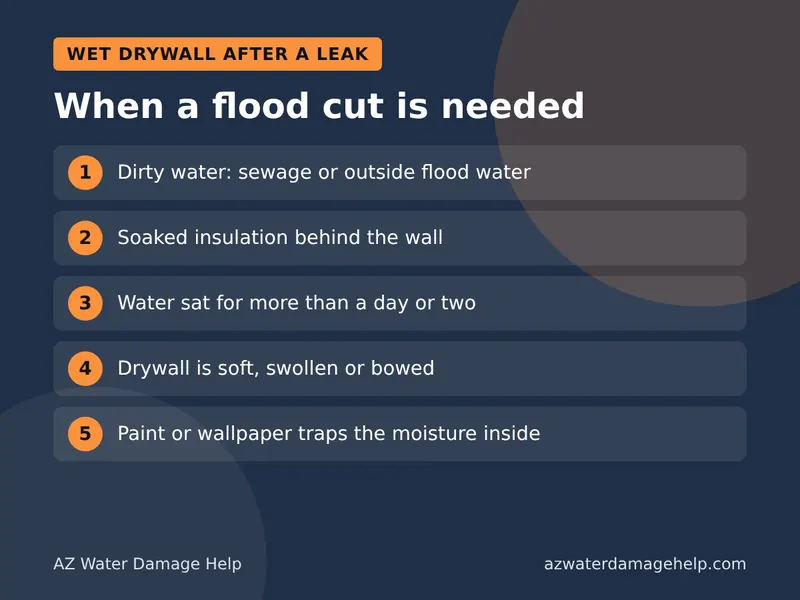
A flood cut is a straight cut along a wall, usually 12 to 24 inches above the floor or just above the highest wet point, to remove water-damaged drywall. It is needed when the water was dirty, when insulation behind the wall is soaked, or when the wall cannot dry in place within a few days. Clean water damage caught early can often be dried without cutting.
After a leak or flood, a restoration crew may tell you they need to "flood cut" your walls. It sounds drastic, but it is often the fastest way to dry a wall and stop mold. This guide explains what a flood cut is, when it is needed, how high the cut goes and how to avoid one when you can.
If you have water on the floor right now, our water removal service Arizona line is answered 24/7.
Reading this with water on the floor? Get help first.
Need Help Now? Tap Here(833) 937-0179What is a flood cut?
A flood cut is a level line cut across the drywall, usually 12 to 24 inches above the floor, or about a foot above the highest moisture reading. The crew removes the drywall below the line, pulls out wet insulation, and dries the studs and bottom plate. Later, a new strip of drywall is installed, taped and painted. Cutting at a standard height makes the patch easier to finish.
When is a flood cut needed?
- Dirty water. Sewage backups and outside flood water require removal under the IICRC water damage standard.
- Wet insulation. Soaked batts behind the wall hold water and will not dry in place.
- Long exposure. Water that sat for more than a day or two often means mold has started.
- Swelling or crumbling. Drywall that is soft or bowed has lost its strength.
- Vinyl wallpaper or several layers of paint that trap moisture inside the wall.
Swollen baseboards are often the first sign. Our swollen baseboards guide covers what they tell you.
When can drywall be dried without cutting?
Clean water from a supply line, caught within a few hours, can often be dried in place. Crews pull the baseboard, drill small holes behind it, and blow dry air into the wall cavity. Arizona's dry air helps, and a wall with no insulation, such as many interior walls, dries faster. Moisture meter readings decide when it is dry.
Our guide on whether wet drywall and carpet can be saved walks through the same decision.
What does a flood cut cost in Arizona?
A flood cut is part of the larger repair, not a separate job. Burst pipe jobs that include drywall removal and drying usually cost about $1,500 to $5,000, and drying alone runs about $1,000 to $3,500. If mold is found behind the wall, our water damage mold removal service usually adds $1,500 to $4,000.
A burst supply line is the most common cause of a flood cut. Our burst pipe repair Tucson crews handle the water side of those jobs. For homes in the Phoenix area, see our guide to pipe breaks Phoenix AZ homeowners can act on in the first hour.
What should you ask before the crew cuts?
- What do the moisture readings show, and how high is the water?
- Is the water clean, gray or black?
- Is there insulation in this wall?
- Can any section be dried in place instead?
- Will you photo the wall before and after for insurance?
Keep the photos and moisture logs. Insurers often ask why the cut was needed. We serve homes across Arizona, including water damage restoration Maricopa AZ.
Dealing with water damage now? Talk to a live person 24/7.
Get Expert Help 24/7(833) 937-0179Frequently asked questions
How high is a flood cut?
Usually 12 to 24 inches above the floor, or about a foot above the highest wet reading. Some jobs cut at 4 feet to match a full sheet.
Can I do a flood cut myself?
You can, but turn off power to the wall first, check for wires and pipes, and wear a mask. A pro measures moisture to set the right height.
Does insurance pay for a flood cut?
If the water damage is covered, the drywall removal and replacement is usually part of the claim.
How long does a wall take to dry after a flood cut?
Usually three to five days with air movers and dehumidifiers, faster in Arizona's dry air.

About the author
Noah Miller founded AZ Water Damage Help in Queen Creek to give Arizona homeowners fast, honest water damage help. He writes and updates these guides using public guidance from the EPA, the IICRC, the National Weather Service and Arizona state agencies. More about Noah.