
Swollen or Warped Baseboards: What They Mean and What to Do
Swollen or warped baseboards almost always mean water has reached them. Most baseboards are MDF, which soaks up water like a sponge and swells. The water can come from a leak in the wall, a slab leak, a shower, an appliance, a mopped floor or storm water. Find and stop the source, then check the wall and floor behind the baseboard for moisture.
Baseboards sit right where the wall meets the floor, so they are often the first thing to show water damage. In most Arizona homes built in the last 25 years, baseboards are made of MDF, a pressed wood board. MDF swells and splits when it gets wet, and it does not shrink back. A swollen baseboard is a clue, not the problem. This guide shows how to find what is behind it.
Reading this with water on the floor? Get help first.
Need Help Now? Tap Here(833) 937-0179What makes baseboards swell?
Baseboards swell when water reaches them from the wall, the floor or the room. The most common sources are:
- A leak inside the wall from a supply line, drain or shower valve.
- A slab leak under the floor, which wets the floor and wicks up into the trim.
- A shower or tub leaking at the pan, the caulk or the door.
- Appliances such as the dishwasher, fridge ice maker or washer.
- The AC, when the condensate line or drain pan overflows near the air handler.
- Outside water from monsoon rain, sprinklers or a patio that slopes toward the house.
Mopping with a lot of water or steam cleaners can also swell the bottom edge. That damage is usually even along the whole room, not in one spot.
How do I tell if the water is still coming?
- Press the baseboard and the wall just above it. Soft or cool spots mean moisture.
- Look for paint that bubbles, peels or turns yellow.
- Smell close to the floor. A musty smell points to moisture behind the wall.
- Check the next room on the other side of the wall, and the bathroom or kitchen nearby.
- Turn every tap off and watch the water meter. If it moves, a pipe may be leaking.
- Check again in a day or two. Damage that spreads means water is still coming.
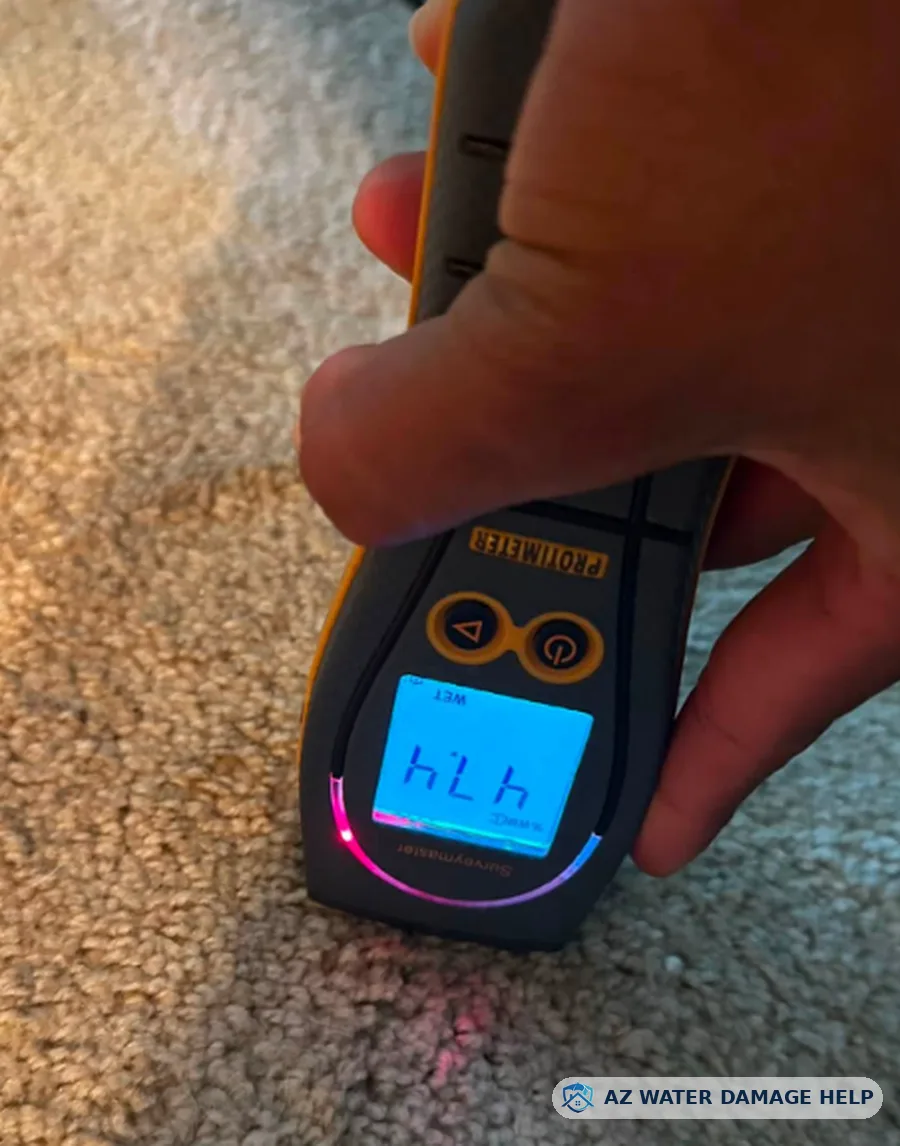
A moisture meter gives a clear answer. Many restoration crews will take readings along the wall to map how far the water has gone.
Which room tells me the most?
Where the baseboard swells is a strong hint. A baseboard next to a shower or tub points to a shower leak; see our guide to shower leak water damage. Swelling along an inside wall in the middle of the house, far from any plumbing, can mean a slab leak. Our guide to slab leak signs in Arizona homes lists the other clues, such as a warm floor or a running meter. Swelling behind the fridge, dishwasher or washer points to an appliance leak.
Is it safe to just replace the baseboard?
Not until the source is fixed and the wall is dry. New trim over a wet wall will swell again, and the drywall behind it may be growing mold. The EPA advises drying wet building materials within 24 to 48 hours to help prevent mold. If the bottom of the drywall is soft or stained, a flood cut may be needed: the crew removes the bottom 12 to 24 inches of drywall so the wall can dry from inside.
What does drying and repair involve?
After the leak is fixed, a crew removes the swollen baseboard, checks the drywall and insulation, and sets air movers and a dehumidifier. Most walls dry in three to five days. Then new baseboards are cut, installed and painted. If moisture got under laminate or wood flooring, that floor may need drying or removal too. See how long water damage takes to dry and whether wet drywall and carpet can be saved.
Will insurance pay for swollen baseboards?
It depends on the cause. A sudden leak, such as a burst supply line, is often covered. Damage from a slow leak that went on for months is often excluded. Take photos before anything is removed and keep the leak repair invoice. Our guide to Arizona insurance and water damage explains what adjusters look for.
Dealing with water damage now? Talk to a live person 24/7.
Get Expert Help 24/7(833) 937-0179Frequently asked questions
Can swollen MDF baseboards be fixed?
Usually not. MDF that swells stays swollen. Once the wall is dry, the damaged pieces are replaced and painted.
Why are my baseboards swelling with no visible leak?
The water may be inside the wall or under the floor. A slab leak or a slow pipe leak can wet baseboards with no puddle in the room.
Does a swollen baseboard mean mold?
Not always, but it means moisture. If the drywall behind it stayed wet for more than a day or two, mold may have started.
How do I stop baseboards from swelling after mopping?
Use a damp mop, not a wet one, and dry the floor edges. Seal the bottom edge of new baseboards with paint or caulk.

About the author
Noah Miller founded AZ Water Damage Help in Queen Creek to give Arizona homeowners fast, honest water damage help. He writes and updates these guides using public guidance from the EPA, the IICRC, the National Weather Service and Arizona state agencies. More about Noah.
Sources
- EPA: Mold
- EPA WaterSense: Fix a Leak Week
- IICRC (Institute of Inspection, Cleaning and Restoration Certification)