
Water Damage in a Manufactured Home: What Is Different
Manufactured homes are more sensitive to water than site-built homes because the floor decking is often particle board or OSB and the plumbing runs under the floor behind a sealed belly wrap. A small leak can soak the subfloor and insulation before you see it. Stop the water, check under the home and start drying quickly.
Manufactured and mobile homes are common across Pinal County and southern Arizona, from retirement parks in Casa Grande and Florence to rural lots near Eloy and Arizona City. They handle water differently than site-built homes. This guide explains where leaks hide and how drying works.
Reading this with water on the floor? Get help first.
Need Help Now? Tap Here(833) 937-0179Why is water damage worse in a manufactured home?
Most manufactured homes sit on a steel chassis with the floor built over it. The floor decking is often particle board or OSB, which swells and loses strength when wet. Supply and drain lines run below the floor, inside a sealed underbelly wrap with insulation. When a pipe leaks, water collects in that wrap and soaks up into the floor, out of sight.
Many older units also have roofs with low slopes and roof-mounted swamp coolers, both of which can leak into ceilings. See swamp cooler leaks for that problem.
Where do leaks start in a manufactured home?
| Source | Warning sign |
|---|---|
| Supply lines under the floor | Soft floor, sagging belly wrap, water dripping under the home |
| Water heater closet | Damp floor or swollen decking near the closet door |
| Tub and shower drains | Soft spot by the tub, musty smell |
| Roof seams and vents | Ceiling stains after monsoon storms |
| Swamp cooler on the roof | Stain or drip near the cooler vent |
| Washer and kitchen lines | Swelling at cabinet bases and floor joints |
How do I check under my manufactured home?
Look from outside first, with a flashlight, without crawling under unless it is safe. Check for water dripping from the belly wrap, sagging or torn wrap, wet ground under the home and damp skirting.
- Turn off all water and watch the meter or pressure tank. If it moves, there is a leak.
- Walk the floors and feel for soft, spongy or uneven spots.
- Look for swelling at seams in vinyl or laminate.
- Check the water heater closet floor.
- Smell for a musty odor near floor vents, since ducts often run in the belly too.
Arizona sun and heat can make the wrap brittle, and rodents can tear it. Tears let insulation get wet and sag. Our guide to signs of hidden water damage lists other clues.
How is a manufactured home dried?
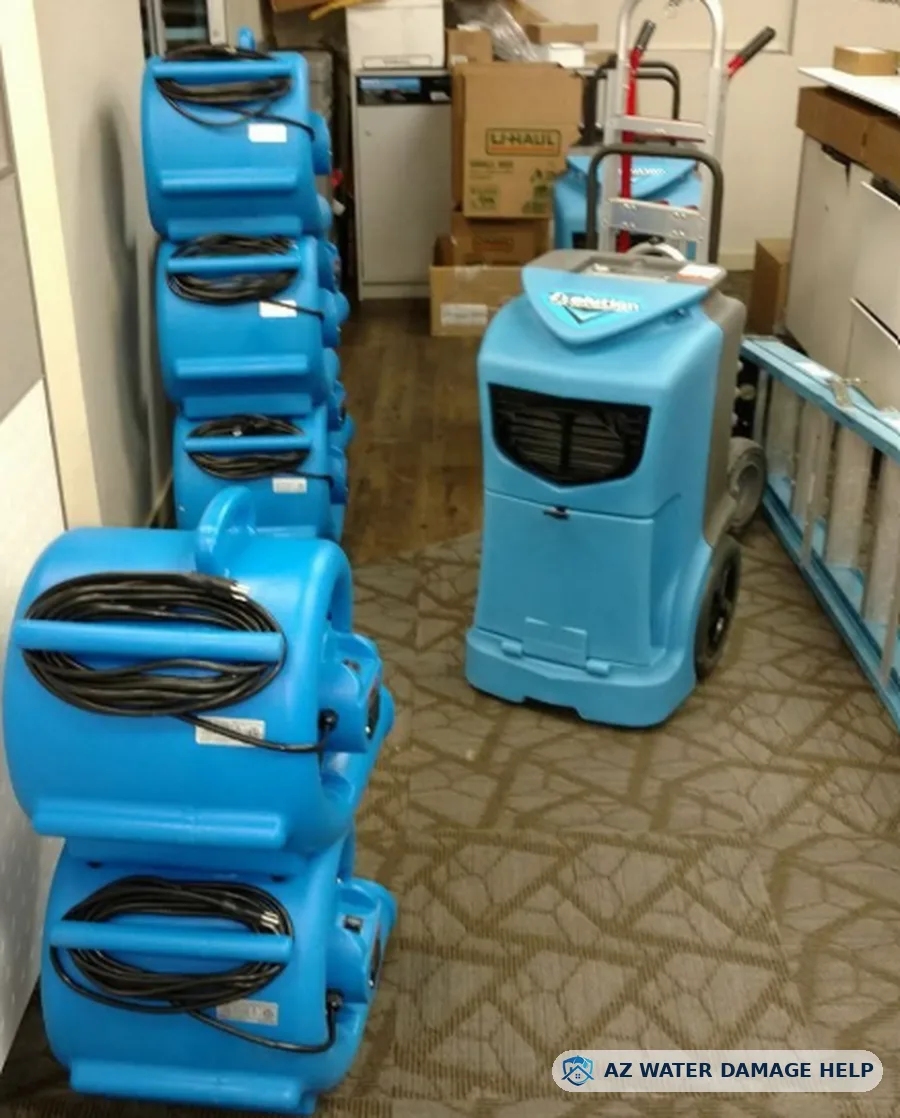
Drying starts with stopping the leak and removing standing water. Then the crew opens the belly wrap where it is wet, removes soaked insulation and directs air and dehumidifiers into the floor cavity. Swollen particle board decking usually has to be cut out and replaced, while OSB and plywood may dry if caught early.
- Stop the water and repair the leak.
- Extract standing water inside and remove wet carpet pad.
- Open the belly wrap and remove wet insulation.
- Dry the floor cavity and framing with air movers and dehumidifiers.
- Replace damaged decking, insulation and wrap once dry.
Learn more about the full water damage restoration process.
How do I protect a manufactured home while I am away?
Many winter visitors leave manufactured homes empty for the summer. Shut off the main water valve or install a smart leak sensor with auto shutoff, drain the swamp cooler, and ask a neighbor to check the home after big storms. Our seasonal home guide has a full checklist.
Does insurance cover water damage to a manufactured home?
Many policies written for manufactured homes cover sudden water damage, but rules on slow leaks, mold and flood vary. Read your policy, call your agent early and keep photos and drying logs. Our insurance claim help page explains what we document.
Dealing with water damage now? Talk to a live person 24/7.
Get Expert Help 24/7(833) 937-0179Frequently asked questions
Can a wet manufactured home floor be saved?
Sometimes. OSB or plywood decking caught early may dry. Swollen particle board usually has to be replaced.
Do you work on mobile homes and manufactured homes?
Yes. We dry manufactured and mobile homes, including the subfloor and underbelly, across our Arizona service areas.
Why is my manufactured home floor soft?
A soft spot often means the decking got wet from a leak below or nearby, such as a supply line, toilet or tub drain.
Should I cut the belly wrap myself?
Only if it is safe. Wet insulation is heavy, and the wrap has to be resealed after drying. A crew can open and repair it properly.
How long does drying take?
Most jobs take three to five days. Removing and replacing decking or insulation can add time.

About the author
Noah Miller founded AZ Water Damage Help in Queen Creek to give Arizona homeowners fast, honest water damage help. He writes and updates these guides using public guidance from the EPA, the IICRC, the National Weather Service and Arizona state agencies. More about Noah.
Sources
- HUD: Manufactured Housing Program
- EPA: Mold
- IICRC (Institute of Inspection, Cleaning and Restoration Certification)