
Can I Stay in My Home During Water Damage Restoration?
Most families can stay home during water damage drying if the water was clean, the damage is in a few rooms and power and plumbing still work. It may be better to leave if the water was sewage, mold is being removed, the kitchen or only bathroom is out of use, or someone in the home has asthma or a weak immune system.
After a leak, one of the first questions people ask is whether they have to move out. For many homes the answer is no. Drying equipment is loud and warm, but it is safe to be around when the water was clean. In other cases, a few days away is the safer and easier choice. This guide helps you decide.
Reading this with water on the floor? Get help first.
Need Help Now? Tap Here(833) 937-0179When is it OK to stay home?
- The water was clean, such as a supply line, water heater or sink leak.
- The damage is in one or a few rooms that can be closed off.
- You still have power, water and a working bathroom.
- No one in the home has asthma, lung disease or a weak immune system.
- No mold removal or heavy demolition is going on.
When should I plan to leave?
| Situation | Why it matters |
|---|---|
| Sewage or flood water inside | It can carry bacteria and needs careful cleanup |
| Mold removal under containment | Disturbing mold can release spores |
| Kitchen or only bathroom out of use | Daily life becomes hard for several days |
| Power cut to large parts of the home | No AC in Arizona heat is a health risk |
| Babies, older adults or people with breathing problems | They are more sensitive to dust, mold and heat |
If sewage was involved, read our guide to sewage backup in your home before anyone goes back into the area.
What is it like to live with drying equipment?
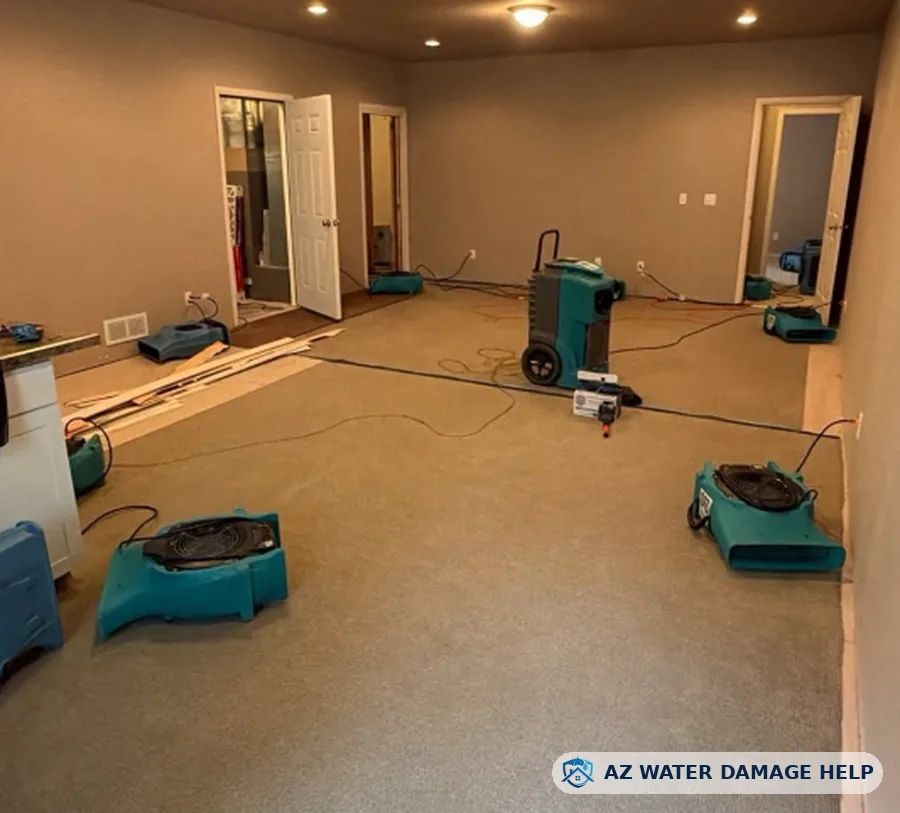
Air movers are loud, like a strong box fan, and they run day and night. Dehumidifiers put out heat, so wet rooms can get warm. In an Arizona summer, keep the AC running unless the crew asks you to change the setting. Keep doors to drying rooms closed if asked, and do not turn the equipment off or move it. Shutting it off can add days to the job. Most homes dry in three to five days. Learn more in how long water damage takes to dry.
How can I make the drying days easier?
- Ask the crew which rooms you can use and which to keep closed.
- Move pets to a quiet room away from the equipment.
- Keep children away from cords, fans and opened walls.
- Run a white noise app or use earplugs if you sleep near the fans.
- Check your power use. Drying gear uses a lot of electricity, and the crew can help spread it across circuits.
Will insurance pay for a hotel?
Many homeowners policies include "additional living expenses" or "loss of use" coverage. It may pay for a hotel, meals and extra costs if your home is not livable during a covered repair. Ask your adjuster before you book, keep all receipts and get the crew's notes on why the home was not livable. Renters insurance often has a similar benefit.
What happens during each step of restoration?
Water is removed first, then wet materials that cannot be saved are taken out, then drying starts and moisture is checked each day. Repairs come last. Knowing the order helps you plan when to be home. Our step-by-step restoration guide explains each stage.
Dealing with water damage now? Talk to a live person 24/7.
Get Expert Help 24/7(833) 937-0179Frequently asked questions
Is it safe to sleep in a room with dehumidifiers running?
With clean water damage, yes, but it can be loud and warm. Many people sleep in another room if they can.
Can I turn the drying fans off at night?
It is best not to. Turning them off slows drying and can add days. Ask the crew before you change anything.
How long will I need to stay elsewhere?
It depends on the damage. Drying often takes three to five days, and repairs can take longer if walls or floors were removed.
Does homeowners insurance pay for a hotel during water damage repairs?
Many policies include loss of use coverage for covered claims. Ask your adjuster first and keep every receipt.
Is it safe to stay home if there is mold?
Small spots are usually not a reason to leave. For large mold removal under containment, staying out of that area, or the home, is safer.

About the author
Noah Miller founded AZ Water Damage Help in Queen Creek to give Arizona homeowners fast, honest water damage help. He writes and updates these guides using public guidance from the EPA, the IICRC, the National Weather Service and Arizona state agencies. More about Noah.