
How Long Does Water Damage Take to Dry? An Arizona Guide
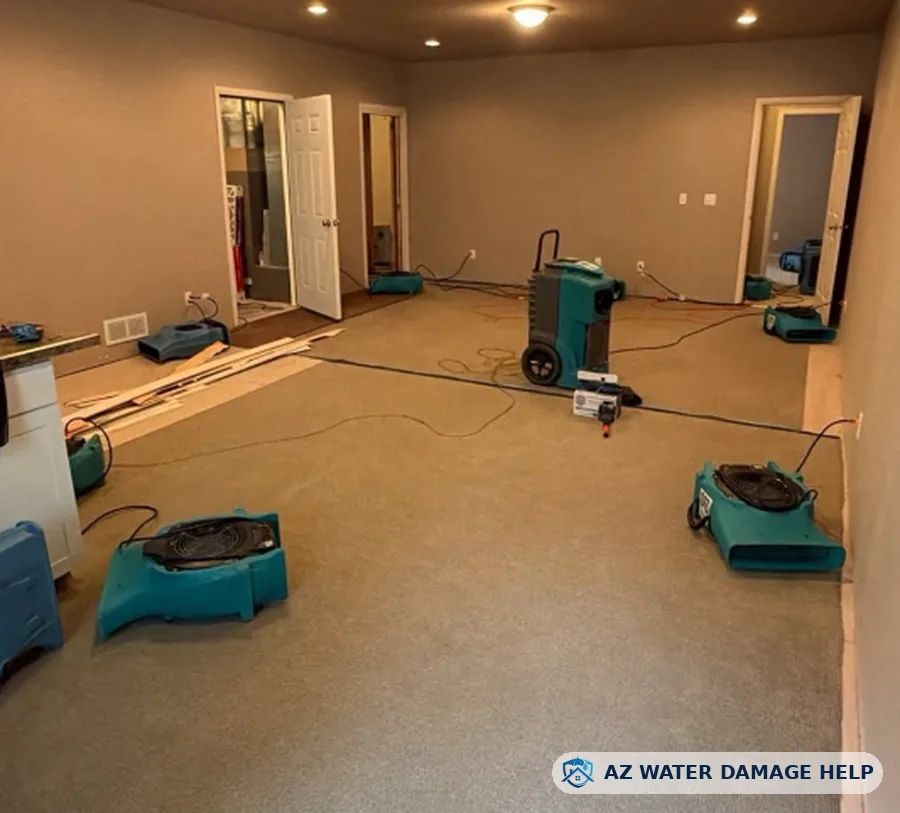
With professional air movers and dehumidifiers, most clean water damage in a home dries in about three to five days. Hardwood floors, wet slabs, wall cavities and contaminated water can take longer. Drying is done when moisture readings match dry areas of the same material, not when surfaces feel dry.
After a leak or flood, the first question is often "how long until this is dry?" The answer depends on how much water there was, what got wet and how fast drying starts. This guide explains typical drying times, what changes them in Arizona homes, and how a crew knows when the job is done.
Reading this with water on the floor? Get help first.
Need Help Now? Tap Here(833) 937-0179How long does it take for water damage to dry?
For a clean water leak caught early, most rooms dry in about three to five days with professional equipment. A small spill on tile may dry in a day. A burst pipe that soaked carpet, pad, drywall and the slab can take a week or more.
| Situation | Typical drying time |
|---|---|
| Small clean spill on tile or vinyl | About 1 day |
| Wet carpet and pad, clean water, caught early | About 2 to 4 days |
| Wet drywall and baseboards | About 3 to 5 days |
| Hardwood floors | Often 1 to 2 weeks or more |
| Wet concrete slab | Can take several days to weeks |
These are general ranges. Every job is measured, and the crew should tell you how drying is going each day.
Why does Arizona's dry air not dry everything fast?
Low humidity helps, but it is not enough on its own. Water soaks deep into drywall, wood, carpet pad and concrete. Fans and dehumidifiers move air across wet materials and pull water out of them. Without that, the surface can feel dry while the inside stays wet.
During monsoon season, indoor humidity can rise quickly, which slows drying. Closed-up rooms in summer heat can also grow mold fast if moisture is trapped.
What slows down drying?
- Late start: water spreads and soaks deeper the longer it sits.
- Dense materials: hardwood, plaster and concrete hold water longer than drywall.
- Trapped moisture: vinyl flooring, wallpaper and cabinets can seal water in.
- Wall cavities: insulation and the back side of drywall dry slowly without holes for air flow.
- Contaminated water: materials may need to be removed and the area cleaned before drying.
Some crews drill small holes along the bottom of walls or remove baseboards to get air into the cavity. See whether wet drywall and carpet can be saved.
How do pros know when it is dry?
Restoration crews use moisture meters and thermal cameras. They take readings in dry parts of the home as a goal, then check wet areas each day until they match. The IICRC sets common standards for this process.
- Map every wet area with a moisture meter on day one.
- Set air movers and dehumidifiers.
- Take readings each day and move equipment as needed.
- Remove equipment only when readings reach the dry goal.
- Keep the readings as records for your insurance claim.
Ask for a copy of the daily drying log. Learn more in our restoration process guide.
Can I dry water damage myself?
Small, clean spills on hard floors can often be dried with towels, fans and the AC running. Larger jobs, wet carpet pad, wet walls and anything that touched sewage are harder. Household fans rarely pull enough water from walls and floors, and hidden moisture can lead to mold. The EPA advises drying wet materials within 24 to 48 hours to help prevent mold growth.
What happens if drying stops too soon?
Materials that are still wet inside can grow mold, warp, smell musty or lose strength. Flooring installed over a damp slab can fail later. That is why the readings matter more than how the room feels. If you notice a musty smell after a job, read what a musty smell means after water damage.
Dealing with water damage now? Talk to a live person 24/7.
Get Expert Help 24/7(833) 937-0179Frequently asked questions
Can I stay in my home while it dries?
Often yes, if the water was clean and the damage is limited. Equipment is noisy and warm, and some rooms may be closed off.
Should I turn off the AC during drying?
Usually no. The crew will tell you how to set the thermostat. Cool, dry air often helps the dehumidifiers work.
Why are holes drilled in my walls?
Small holes let dry air into the wall cavity so the back of the drywall and the framing can dry without removing the whole wall.
How long does a wet slab take to dry?
It depends on how long it was wet and its thickness. It can take days to weeks. Readings show when it is ready for flooring.
Will insurance pay for drying equipment?
If the water damage is covered, drying is usually part of the claim. Keep the daily drying log for your adjuster.

About the author
Noah Miller founded AZ Water Damage Help in Queen Creek to give Arizona homeowners fast, honest water damage help. He writes and updates these guides using public guidance from the EPA, the IICRC, the National Weather Service and Arizona state agencies. More about Noah.