
Toilet Overflow Water Damage: What to Do and When It Is Unsafe
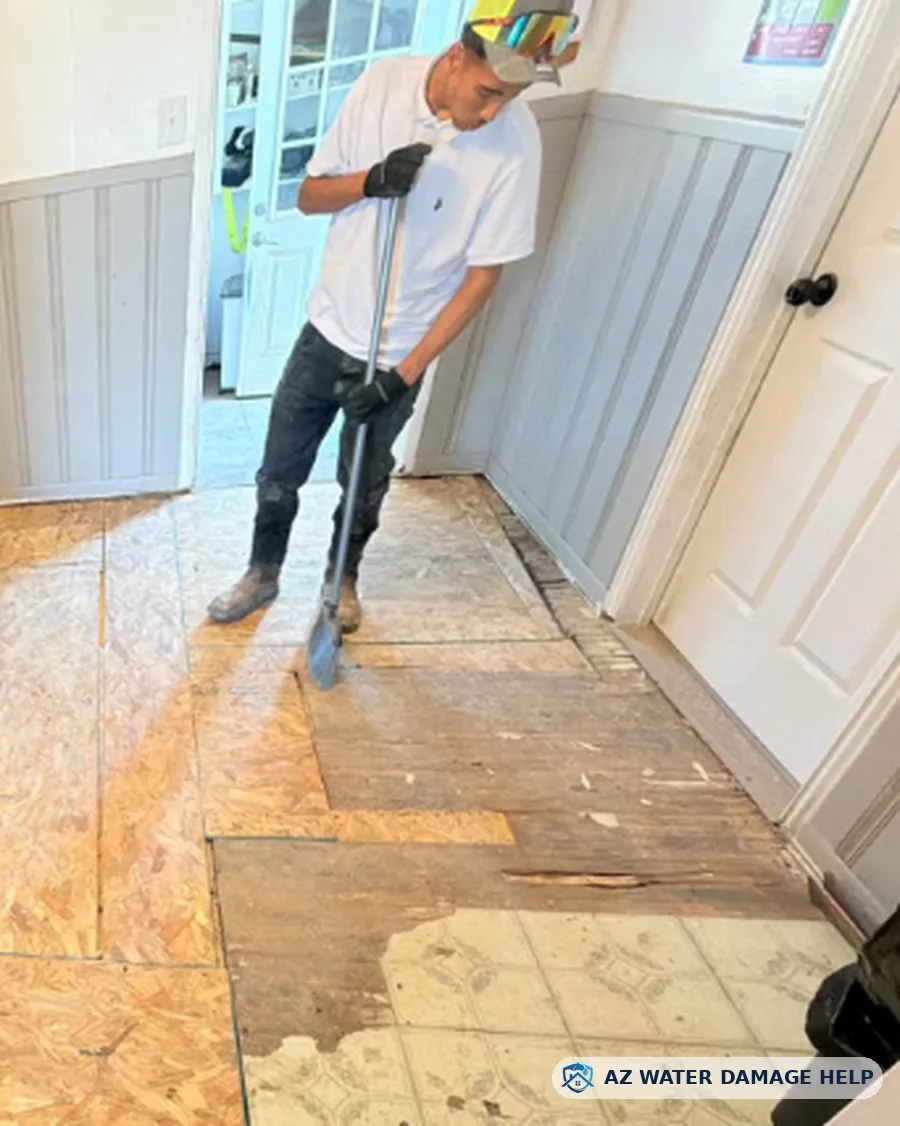
If a toilet overflows, close the shut-off valve behind it, lift the tank lid and push the flapper down, then keep people and pets out of the wet area. Water from the tank or a clean bowl is lower risk. Water that touched waste is contaminated, so wet carpet, pad and drywall it reached usually need to be removed by a professional.
A toilet overflow feels small until water runs under the vanity, into the hallway carpet or through the ceiling below. What you do in the first hour decides how much has to be torn out. This guide covers the first steps, how to judge the water, and what can be dried or must go.
Reading this with water on the floor? Get help first.
Need Help Now? Tap Here(833) 937-0179What should I do the moment a toilet overflows?
Stop the water first. Turn the oval valve on the wall behind the toilet clockwise until it stops. If the valve is stuck, lift the tank lid and push the flapper down to stop the fill, then lift the float to shut off the refill.
- Close the supply valve behind the toilet.
- Do not flush again until the clog is cleared.
- Keep children and pets out of the wet area.
- Turn off power to outlets near the water if you can do it safely from a dry spot.
- Photograph the water, the toilet and every wet room before cleanup.
- Wear gloves and boots if the water touched waste.
Is toilet overflow water dangerous?
It depends on where the water came from. The restoration industry groups water into three categories. Clean water from a supply line or the tank is Category 1. Water from a bowl with no waste is often treated as Category 2 (gray water). Water that touched feces is Category 3 (black water) and can carry bacteria and viruses.
| Source | Usual category | What it means for cleanup |
|---|---|---|
| Broken supply line or tank leak | Category 1 (clean) | Most materials can be dried if work starts fast |
| Bowl overflow, no waste | Category 2 (gray) | Clean and disinfect; carpet pad is often replaced |
| Bowl overflow with waste | Category 3 (black) | Porous materials it touched are removed |
| Water left sitting for days | Gets worse over time | Clean water can turn gray or black as bacteria grow |
Arizona heat speeds up bacteria and mold growth, so even clean water should not be left to sit. If the overflow came from a main line backup rather than one toilet, read what to do after a sewage backup.
What can be saved after a toilet overflow?
Hard surfaces like tile, porcelain, sealed concrete and metal can usually be cleaned and disinfected. Porous materials are the problem. Carpet pad, drywall, baseboards and vanity bottoms made of particle board soak up water and hold it.
- Tile and sealed floors: clean and disinfect.
- Carpet touched by clean water: often dried in place if work starts within a day or two.
- Carpet and pad touched by black water: usually removed.
- Drywall: wet sections touched by black water are cut out, often 12 to 24 inches above the wet line.
- Particle board vanities: often swell and need replacement.
Our guide on whether wet drywall and carpet can be saved explains the rules in more detail.
Why does water go so far from the bathroom?
Water follows gravity and the path of least resistance. On a slab, it runs under baseboards and tack strip into the next room. On a second floor, it soaks the subfloor and comes through the ceiling below, often at a light fixture. A moisture meter finds the edge of the wet area, which is often wider than it looks.
In two-story homes in places like Maricopa and San Tan Valley, an upstairs overflow can show up as a stain in the kitchen ceiling. See ceiling water stains for what that means.
When should I call a professional?
- The water touched waste and reached carpet, drywall or cabinets.
- Water went through a floor into a ceiling below.
- More than one room is wet.
- The floor still feels damp the next day.
- You notice a sewage or musty smell.
- Several drains are backing up at once, which points to a main line clog.
A crew can extract water, set containment, remove contaminated materials, disinfect and dry with daily readings. See our sewage backup cleanup and emergency water removal services.
Will insurance pay for toilet overflow damage?
Many Arizona homeowners policies cover sudden and accidental water damage, which can include an overflow. Damage from repeated or slow leaks is often excluded, and backup of sewers or drains may need an added endorsement. Call your insurer early and keep photos and invoices. Our insurance coverage guide explains the usual rules.
Dealing with water damage now? Talk to a live person 24/7.
Get Expert Help 24/7(833) 937-0179Frequently asked questions
Can I clean up a toilet overflow myself?
If the water was clean and only hit tile, yes: soak it up, clean and disinfect. If it touched waste and reached carpet, drywall or cabinets, a professional is safer.
How long does it take to dry after a toilet overflow?
Small clean water jobs often dry in two to three days. Jobs with contaminated water take longer because materials are removed and the area is disinfected first.
Should I use bleach after a toilet overflow?
Bleach can disinfect hard surfaces, but it does not fix wet drywall or pad. Never mix bleach with ammonia or other cleaners.
Why did my toilet overflow?
Most overflows come from a clog in the toilet or drain. If several drains back up at once, the main sewer line may be blocked.
Will mold grow after a toilet overflow?
It can. The EPA advises drying wet materials within 24 to 48 hours to help prevent mold growth.

About the author
Noah Miller founded AZ Water Damage Help in Queen Creek to give Arizona homeowners fast, honest water damage help. He writes and updates these guides using public guidance from the EPA, the IICRC, the National Weather Service and Arizona state agencies. More about Noah.