
Irrigation Leak Water Damage: How Sprinklers Soak Arizona Homes
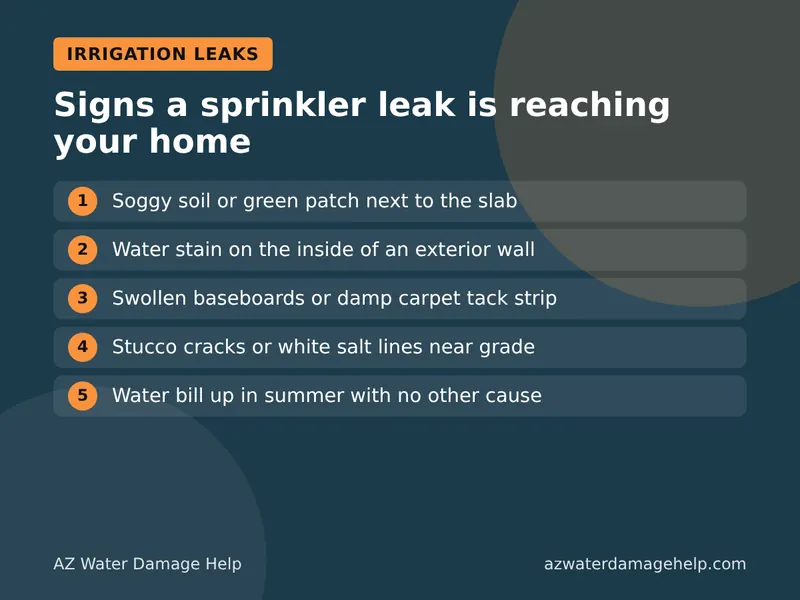
An irrigation leak next to the house can soak the slab edge, the bottom of exterior walls, baseboards and carpet tack strip. Signs include soggy soil or extra green growth by the foundation, stains on the inside of an exterior wall, swollen baseboards, stucco cracks near grade and a water bill that climbs in summer. Turn off the system, dry the area and fix the line. Drying usually costs about $1,000 to $3,500.
Most Arizona yards run on drip or sprinkler systems, often with lines and emitters right next to the house. When a line cracks, an emitter pops off or a valve sticks open, water soaks the soil along the slab. That water wicks into the bottom of walls and floors. It is one of the most common sources of hidden water damage we see in desert homes.
If you already have wet carpet or a soaked wall, our water removal service Arizona line is answered 24/7.
Reading this with water on the floor? Get help first.
Need Help Now? Tap Here(833) 937-0179What are 5 signs a sprinkler leak is reaching your home?
- Soggy soil or a green patch right next to the slab, even days after watering.
- A stain on the inside of an exterior wall, low on the wall, on the same side as the planter or lawn.
- Swollen baseboards or damp carpet tack strip along that wall. See our swollen baseboards guide.
- Stucco cracks or white salt lines near the ground.
- A water bill that jumps in summer with no other cause.
How is this different from a slab leak?
Both can wet the floor, but the source is different. A slab leak is a pressurized pipe under the house, so the water meter moves even with the irrigation off. An irrigation leak only shows up when the system runs, or when a valve leaks by. Turn the controller off for two or three days. If the wet area dries, irrigation is the likely cause. If it stays wet, read our slab leak signs guide.
What should you do right away?
- Turn the irrigation controller off and close the valve that feeds the system.
- Pull back the carpet at the wet wall and set fans on it.
- Photo the wet wall, flooring and the outside planter for your records.
- Move drip lines and emitters at least 18 to 24 inches away from the foundation when you repair them.
- Check the soil slopes away from the house.
Many homes in the Valley and in Tucson have planter beds right against the wall. Those beds are the most common source.
How do you find the leaking part of the system?
Run one zone at a time from the controller and walk the yard. A broken drip line often shows as a bubbling spot, a geyser or a wet trench. A sprinkler head that is cracked or tilted toward the house sprays the wall. A valve that leaks by drips from the lowest head on that zone after the system shuts off.
- Look at the valve box for standing water or a constant drip.
- Run each zone for two minutes and watch the area near the house.
- Check drip emitters next to the wall. A missing emitter can flood a bed.
- Look for heads that spray stucco, windows or doors.
- Check your water meter with the house water off and the irrigation on, then off. The difference shows how much the system is losing.
EPA WaterSense notes that a well-kept irrigation system wastes far less water. A smart controller with a rain sensor also cuts the run time during monsoon season.
Can irrigation water damage cause mold?
Yes. Water that wicks into drywall and baseboards from outside often goes unseen for weeks. That is enough time for mold to grow inside the wall. A musty smell near an exterior wall is a warning sign. Our musty smell after water damage guide explains what to check, and our water damage mold removal service handles growth if it is found.
What does the repair cost?
The irrigation repair itself is usually small. The water damage costs more. Drying a wet wall and floor usually runs about $1,000 to $3,500, and mold removal $1,500 to $4,000 if it has started. Most water damage jobs land between $1,000 and $5,000. Insurance often treats slow, ongoing seepage as wear and tear, so catching it early matters.
We serve homes across the state, including water damage restoration Marana AZ. For burst lines inside the house, see pipe breaks Buckeye AZ owners can act on fast.
Dealing with water damage now? Talk to a live person 24/7.
Get Expert Help 24/7(833) 937-0179Frequently asked questions
Can sprinklers damage my foundation?
Constant water next to the slab can wet walls and floors and, in clay soils, make the soil swell and shrink. Keep emitters and spray away from the house.
How far should drip emitters be from my house?
A common guideline is at least 18 to 24 inches, with the soil sloped away from the foundation.
Does insurance cover water damage from irrigation leaks?
Sudden breaks may be covered. Slow seepage over weeks is often treated as maintenance and denied, so act fast and document it.
How do I know if my sprinkler valve is leaking?
Water drips from a head or emitter when the system is off, or the soil around one zone stays wet.

About the author
Noah Miller founded AZ Water Damage Help in Queen Creek to give Arizona homeowners fast, honest water damage help. He writes and updates these guides using public guidance from the EPA, the IICRC, the National Weather Service and Arizona state agencies. More about Noah.